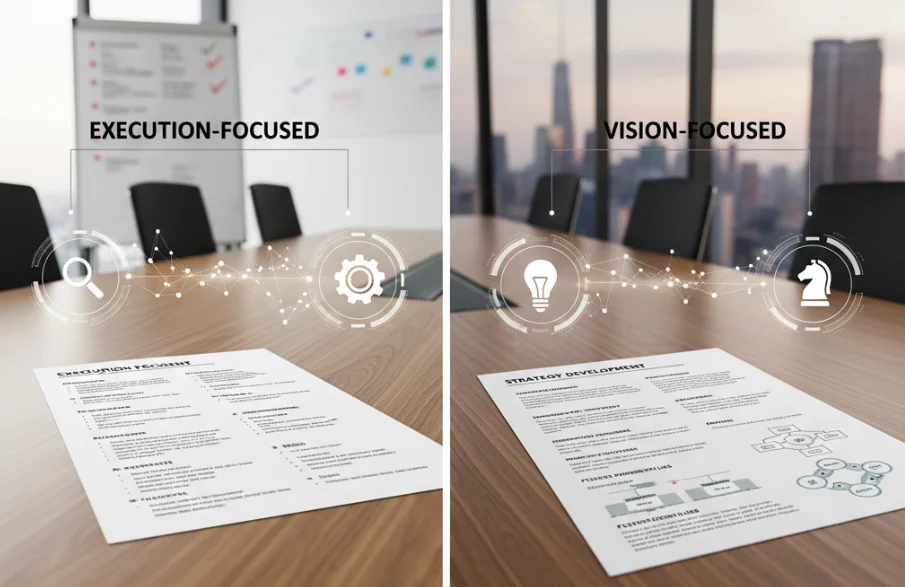
In the hiring process, resumes are not just evaluated based on skills and experience but also on how a candidate presents their professional identity. One of the most important distinctions recruiters and hiring managers notice is whether a resume feels execution focused or vision focused. This distinction influences how a candidate is perceived in terms of role suitability, leadership potential, and overall value to an organization. Understanding what makes a resume fall into either category can help candidates craft a more intentional and impactful narrative.
Understanding Execution vs Vision Focus
Execution Focus Defined
An execution focused resume emphasizes the ability to deliver results, complete tasks efficiently, and manage day to day responsibilities. It highlights operational excellence, consistency, and reliability. Candidates with execution focused resumes are often seen as dependable professionals who ensure that plans are implemented effectively.
Vision Focus Defined
A vision focused resume, on the other hand, emphasizes strategic thinking, long term planning, and the ability to shape direction. It reflects a candidate’s capacity to identify opportunities, influence decisions, and contribute to organizational growth. Vision focused resumes are typically associated with leadership roles and forward thinking professionals.
Key Resume Characteristics
Traits of Execution Focused Resumes
Execution focused resumes are characterized by detailed descriptions of tasks, responsibilities, and processes. They often include specific actions such as managing operations, implementing systems, or maintaining workflows. The emphasis is on how work was carried out rather than why it was done. Metrics are usually tied to efficiency, accuracy, and completion rates.
These resumes tend to include structured bullet points that outline clear responsibilities and measurable outcomes. The language is practical and grounded in day to day activities, demonstrating a strong ability to follow through and deliver consistent results.
Traits of Vision Focused Resumes
Vision focused resumes highlight strategic contributions, big picture thinking, and long term impact. They focus on initiatives that influenced direction, introduced innovation, or improved overall performance. Rather than detailing every task, these resumes emphasize outcomes that align with organizational goals.
Such resumes often include examples of planning, decision making, and influencing stakeholders. The language reflects insight, foresight, and the ability to anticipate challenges. Metrics, when included, are typically linked to growth, transformation, or strategic success.
Impact of Language and Framing
Action Driven Language
Execution focused resumes rely heavily on action oriented language. Words that describe doing, managing, executing, and delivering are commonly used. This type of language conveys reliability and efficiency, making it suitable for roles that require strong operational skills.
Strategic and Conceptual Language
Vision focused resumes use language that reflects thinking, planning, and influencing. Terms related to strategy, innovation, and leadership are more prominent. This language positions the candidate as someone who contributes beyond immediate tasks and adds value at a higher level.
Balancing Execution and Vision
While execution and vision may appear as opposing approaches, the most effective resumes often combine both elements. Employers value candidates who can not only develop ideas but also implement them successfully. A balanced resume demonstrates the ability to translate strategy into action.
For example, a candidate might describe how they identified a process improvement opportunity and then executed the solution to achieve measurable results. This combination of insight and action creates a compelling narrative that appeals to a wide range of roles.
Common Mistakes Candidates Make
One common mistake is over emphasizing execution without demonstrating impact. This can make a resume appear routine and limit its appeal for higher level roles. On the other hand, focusing too much on vision without showing tangible results can make a candidate seem disconnected from practical realities.
Another issue is inconsistent messaging. Mixing execution and vision elements without a clear structure can confuse recruiters and dilute the overall impression. Candidates should aim for clarity and alignment with the role they are targeting.
How to Position Your Resume Effectively
To position a resume effectively, candidates should first understand the requirements of the role. For operational roles, emphasizing execution and reliability is essential. For leadership or strategic roles, highlighting vision and influence becomes more important.
Using a structured approach to describe achievements can help maintain balance. Clearly outlining the situation, action, and result allows candidates to demonstrate both execution and strategic thinking. Including relevant metrics and outcomes strengthens credibility and impact.
It is also important to maintain consistency in tone and focus throughout the resume. Aligning language, achievements, and overall narrative with career goals ensures a cohesive presentation.
Conclusion
Whether a resume feels execution focused or vision focused depends on how experiences are presented, the language used, and the emphasis on tasks versus impact. Both approaches have their value, and the key lies in aligning the resume with the expectations of the role. By understanding these differences and striking the right balance, candidates can create resumes that effectively communicate their strengths and enhance their chances of success in the hiring process.