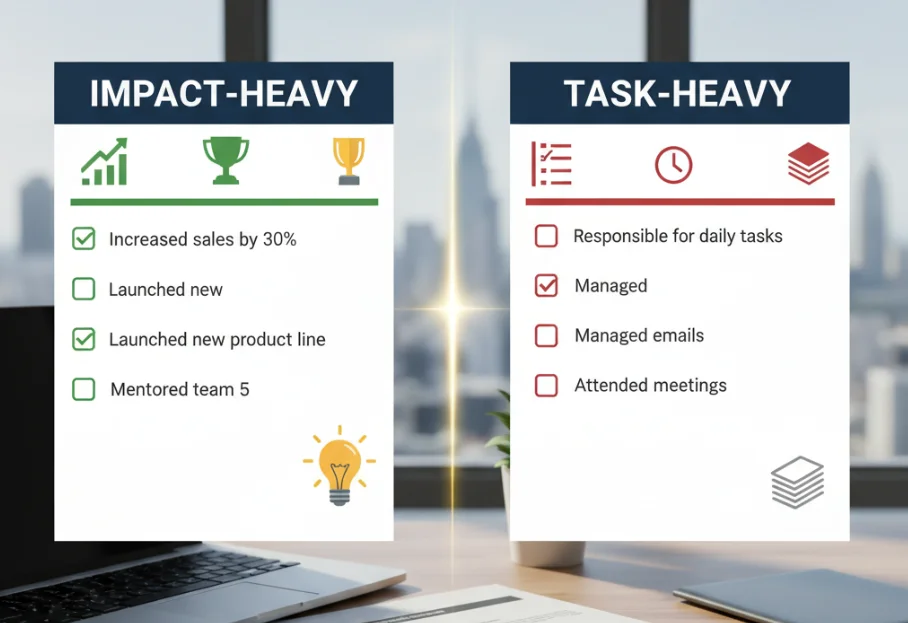
In a competitive job market, the difference between getting shortlisted and being ignored often comes down to how a resume is perceived within seconds. One of the most critical distinctions recruiters make is whether a resume feels impact heavy or task heavy. While both types may list similar experiences, the way information is presented changes the entire perception. An impact heavy resume communicates value, results, and contribution, whereas a task heavy resume reads like a list of responsibilities. Understanding this difference is essential for candidates who want to stand out and demonstrate real professional value.
Understanding the Difference Between Impact Heavy and Task Heavy Resumes
A task heavy resume focuses on what a candidate was assigned to do. It typically includes descriptions of duties without explaining why they mattered or what outcomes were achieved. These resumes often appear descriptive but lack depth.
In contrast, an impact heavy resume highlights what the candidate accomplished. It emphasizes results, improvements, and contributions that made a difference to the organization. Recruiters prefer this format because it directly answers the most important question: what value did this person create
Characteristics of an Impact Heavy Resume
Focus on Results and Outcomes
Impact heavy resumes clearly show the outcomes of actions. Instead of stating activities, they explain what changed as a result of those activities. This creates a strong impression of effectiveness and productivity.
Recruiters are drawn to candidates who can demonstrate tangible contributions rather than just participation.
Use of Quantification
Numbers make impact visible. Metrics such as percentage improvements, revenue growth, time saved, or efficiency gains provide concrete evidence of success.
Even approximate figures can significantly strengthen the perception of impact by giving scale to achievements.
Clear Value Creation
An impact heavy resume communicates how the candidate added value to the organization. This could be through solving problems, improving processes, or achieving business goals.
The emphasis is always on contribution rather than activity.
Signals of Strategic Thinking
Candidates who highlight decision making, prioritization, and initiative demonstrate strategic thinking. This elevates the resume from operational to impactful.
Recruiters interpret these signals as indicators of leadership potential and long-term value.
Characteristics of a Task Heavy Resume
Listing Duties Instead of Achievements
Task heavy resumes often read like job descriptions. They list responsibilities without showing outcomes, making it difficult for recruiters to assess effectiveness.
This approach fails to differentiate the candidate from others with similar roles.
Lack of Context and Purpose
Without context, tasks lose meaning. Recruiters cannot understand why the work was important or how it contributed to larger goals.
This creates a weak narrative and reduces the overall impact of the resume.
Absence of Measurable Results
When resumes lack metrics, achievements appear vague. Recruiters are left to guess the significance of the work, which often leads to undervaluation.
Quantification is a key differentiator between impact and task orientation.
Repetitive and Generic Language
Using similar phrases across multiple bullet points makes the resume feel monotonous. Generic language reduces clarity and fails to highlight unique contributions.
How to Convert Task Heavy Content into Impact Heavy Content
Use of Action Impact Framework
A simple way to transform content is to follow an action impact structure. Start with what was done, then explain the result. This ensures every statement conveys value.
For example, instead of saying managed a team, explain what the team achieved under your leadership.
Adding Metrics and Outcomes
Wherever possible, include numbers that reflect outcomes. These metrics provide clarity and make achievements more credible.
Candidates should focus on measurable improvements rather than general statements.
Highlighting High Priority Work
Not all tasks are equally important. Impact heavy resumes emphasize high priority work that contributed significantly to business goals.
This shows that the candidate understands what matters most and focuses efforts accordingly.
How Recruiters Instantly Recognize the Difference
Recruiters often spend only a few seconds scanning a resume. Impact heavy resumes stand out immediately because they communicate results clearly and concisely.
Strong action verbs, measurable outcomes, and structured content make it easy to identify value. In contrast, task heavy resumes require more effort to interpret, which reduces their effectiveness.
The clarity and focus of an impact heavy resume create a strong first impression and increase the chances of shortlisting.
Common Mistakes That Make Resumes Task Heavy
One common mistake is copying job descriptions directly into the resume. This results in generic content that does not reflect individual contributions.
Another mistake is focusing on too many low-impact tasks instead of highlighting key achievements. This dilutes the overall message.
Candidates also often avoid using numbers, either due to uncertainty or lack of data. However, even estimated figures can improve clarity.
Overloading the resume with information without structure can also make it appear task heavy and difficult to read.
Conclusion
The difference between an impact heavy and a task heavy resume lies in how information is presented. While both may include similar experiences, only one effectively communicates value.
By focusing on results, using metrics, and highlighting meaningful contributions, candidates can transform their resumes into powerful tools that capture recruiter attention. In a competitive hiring environment, this shift from tasks to impact can significantly improve career opportunities.