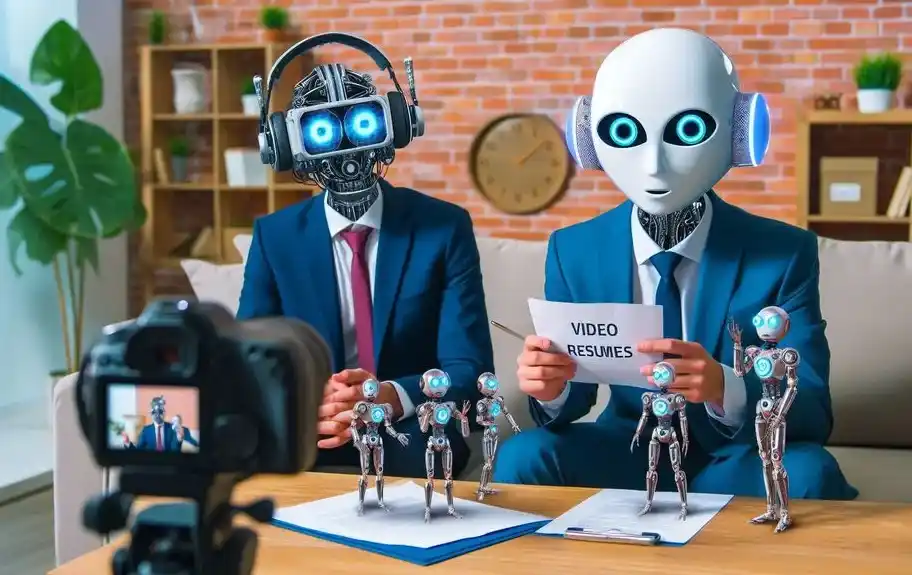
In the rapidly evolving job market, candidates are experimenting with new ways to stand out. Traditional resumes are giving way to innovative methods like video resumes, while employers increasingly use AI interview bots to screen candidates at scale. Both approaches offer unique opportunities and challenges, leaving many job seekers wondering where to focus their energy. This blog explores the strengths and weaknesses of each method and provides guidance on how to invest time strategically in 2025 and beyond.
The Evolution of Candidate Screening
Hiring has shifted from static documents to interactive and technology-driven processes. Video resumes allow candidates to showcase personality, creativity, and communication skills, while AI bots provide employers with scalable, unbiased assessments. The competition between human-centered storytelling and machine-led evaluation reflects the balance that defines modern hiring practices.
The Case for Video Resumes
Advantages of Video Resumes
Video resumes offer a platform for candidates to express personality and soft skills that are hard to capture in text. Employers can quickly assess communication style, confidence, and cultural fit. For creative fields such as design, marketing, and media, video resumes often provide a competitive edge by demonstrating storytelling abilities and presentation skills.
Limitations and Risks of Video Resumes
Despite their advantages, video resumes present risks. They may introduce unconscious bias in hiring based on appearance, accent, or background. Additionally, not all employers accept video submissions, particularly in conservative industries such as law or finance. Candidates may also face technical challenges such as production quality and file compatibility, which could undermine their presentation.
Best Practices for Creating Video Resumes
To maximize effectiveness, video resumes should be concise, professional, and tailored to the target role. Candidates should focus on clarity, structure, and confidence rather than overproducing with heavy effects. Lighting, sound, and background should be carefully considered. A strong video resume highlights unique strengths while complementing rather than replacing a written resume.
The Rise of AI Interview Bots
Benefits of AI Interview Bots
AI interview bots provide employers with efficiency and scalability. Instead of scheduling initial screenings, bots can analyze thousands of candidates simultaneously. They assess tone, keywords, and response quality to generate standardized scores, reducing human bias and accelerating decision-making. For candidates, AI interviews offer flexible scheduling and faster feedback loops.
Challenges and Concerns with AI Interviews
AI-driven interviews raise concerns about fairness, privacy, and transparency. Algorithms may inadvertently favor certain speech patterns or word choices, disadvantaging candidates from diverse backgrounds. Some candidates also feel uncomfortable interacting with bots, which can affect performance. Data privacy is another issue, as candidates want assurance that recorded responses are stored and used ethically.
How to Prepare for AI-Based Interviews
Preparation for AI interviews requires practice with common questions and attention to clear communication. Candidates should focus on structured answers using frameworks like STAR (Situation, Task, Action, Result). Maintaining steady eye contact with the camera, controlling tone of voice, and avoiding filler words are crucial. Since AI evaluates consistency and clarity, rehearsing responses is essential.
Video Resumes vs. AI Interview Bots: Comparative Analysis
When comparing the two, video resumes highlight creativity and human personality, while AI bots emphasize standardization and efficiency. Video resumes are best suited for roles where storytelling, design, or presentation matter. AI bots, on the other hand, dominate early-stage screenings in industries that value data-driven decision-making. For job seekers, the ideal strategy is not choosing one over the other but adapting to both depending on industry norms and employer expectations.
Future Hiring Trends: Blending Human and AI Interaction
By 2030, hiring will likely involve a combination of video resumes and AI interviews. Candidates may first submit AI-analyzed profiles and then share video introductions that recruiters view later. Employers will balance efficiency with human connection, ensuring that technology enhances rather than replaces personal interaction. Hybrid methods will give candidates multiple opportunities to prove their capabilities in both structured and creative ways.
Conclusion
The choice between video resumes and AI interview bots depends on the industry, role, and employer expectations. Video resumes allow candidates to stand out with creativity and personality, while AI bots streamline early screenings with fairness and scalability. The smartest approach is to prepare for both, ensuring adaptability in an evolving job market. Candidates who embrace flexibility and leverage both methods will have the strongest advantage in the hiring landscape of the future.