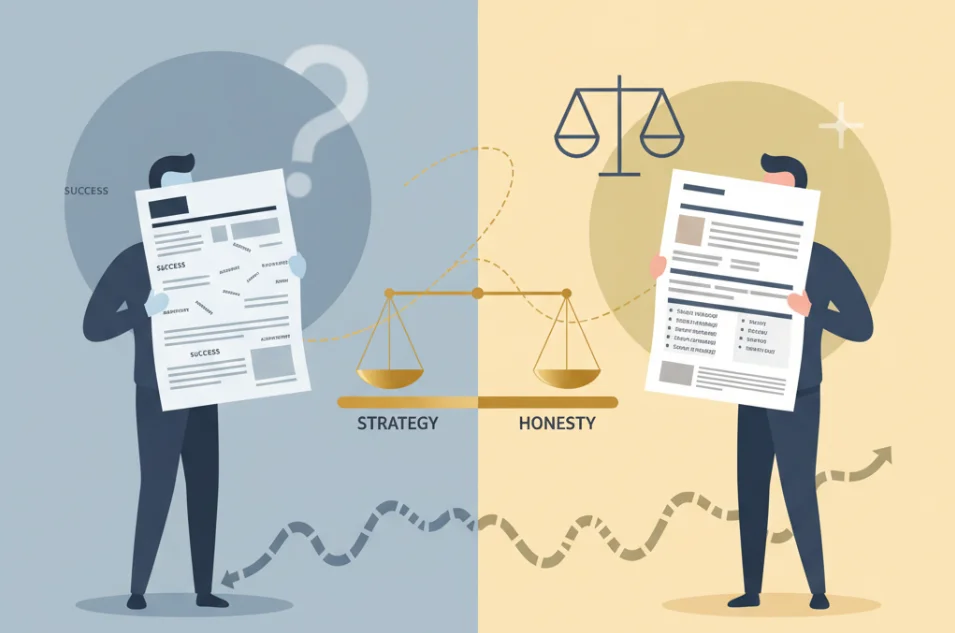
Resumes are carefully curated documents designed to present a professional narrative in a concise and compelling way. Because space is limited, candidates often omit certain details that may not appear directly relevant to the job they are pursuing. This raises an important question in professional resume writing: can omitting information be considered misleading. While resumes are not expected to contain every detail of a career, intentional omission that changes the interpretation of professional history can create ethical and credibility concerns. Understanding the difference between selective presentation and misleading omission helps professionals build resumes that remain both strategic and trustworthy.
Understanding Information Omission in Resumes
Omission occurs when a candidate chooses not to include certain details about their professional background in a resume. Because resumes are summaries rather than full biographies, some level of omission is both common and necessary.
What Omitting Information Means
In the context of resume writing, omission refers to intentionally leaving out details such as certain past roles, early career positions, or projects that may not contribute to the candidate current professional narrative. Strategic omission helps keep the resume focused on the experiences most relevant to the target position.
Difference Between Omission and False Statements
A key distinction exists between leaving out information and providing incorrect information. False statements involve presenting inaccurate details such as incorrect job titles or fabricated achievements. Omission, by contrast, involves not including certain information at all. However, omission can become problematic when it significantly alters how an employer interprets the candidate experience.
When Omitting Information Is Acceptable
Many types of omissions are widely accepted in professional resume writing. The purpose of a resume is to highlight relevant experience rather than document every aspect of a career.
Keeping a Resume Focused and Relevant
Professionals often remove early career roles, temporary positions, or unrelated work experience to keep the resume aligned with their current career direction. For example, a technology professional may omit unrelated part time work from early career stages when applying for advanced technical roles.
Removing Outdated or Irrelevant Experience
Experience that is no longer relevant to the desired career path may also be omitted. Older roles that do not contribute meaningful context can distract from the most important achievements and competencies.
When Omission Can Become Misleading
Omission crosses into misleading territory when it hides information that significantly changes the interpretation of professional history. In these cases, the resume may unintentionally create an inaccurate impression.
Hiding Important Context
If a role played a major part in a candidate recent career history, omitting it entirely may raise questions during background verification or interviews. For example, leaving out a major employer from a recent period could create confusion regarding employment timelines.
Misrepresenting Employment Timelines
Another issue occurs when omission alters the perceived continuity of employment. For instance, removing short roles without adjusting dates may unintentionally suggest uninterrupted employment even when gaps exist.
Ethical Resume Writing Practices
Ethical resume writing focuses on presenting professional achievements clearly while maintaining honesty and transparency. Employers generally expect resumes to highlight strengths, but they also value integrity in the information provided.
Balancing Clarity and Transparency
Candidates can balance strategic presentation with honesty by ensuring that omitted details do not distort the overall timeline or meaning of their career progression. Providing clear date ranges and consistent employment records helps maintain transparency.
Presenting Information Responsibly
Responsible resume writing emphasizes achievements and professional contributions without exaggeration or concealment of essential facts. When uncertain about whether an omission might create confusion, it is often helpful to provide a brief explanation or simplified description instead of removing the information entirely.
Handling Sensitive or Challenging Career Details
Some omissions occur because candidates feel uncertain about how to present challenging career situations. These situations can be addressed thoughtfully without compromising credibility.
Addressing Career Gaps
Career gaps are common and can result from education, personal responsibilities, health considerations, or career transitions. Rather than attempting to hide these periods, professionals may provide a concise explanation when relevant.
Discussing Short Term Roles
Short term roles sometimes raise questions about stability. Instead of omitting them entirely, candidates may choose to group related roles together or explain the project based nature of the work.
Common Resume Mistakes Related to Omission
Common mistakes include removing recent roles that significantly affect employment timelines, omitting educational details that appear elsewhere in professional profiles, or leaving out key experiences that later appear during background checks. These inconsistencies can raise concerns about credibility even if the omission was not intended to mislead.
Conclusion
Omitting information from a resume is not inherently misleading because resumes are designed to present selective highlights rather than complete career histories. However, omission becomes problematic when it changes the interpretation of professional experience or creates inconsistencies that may surface during verification. By focusing on relevance while maintaining transparency and accurate timelines, professionals can craft resumes that remain both strategic and trustworthy. Thoughtful presentation ensures that the resume communicates strengths effectively without compromising professional integrity.