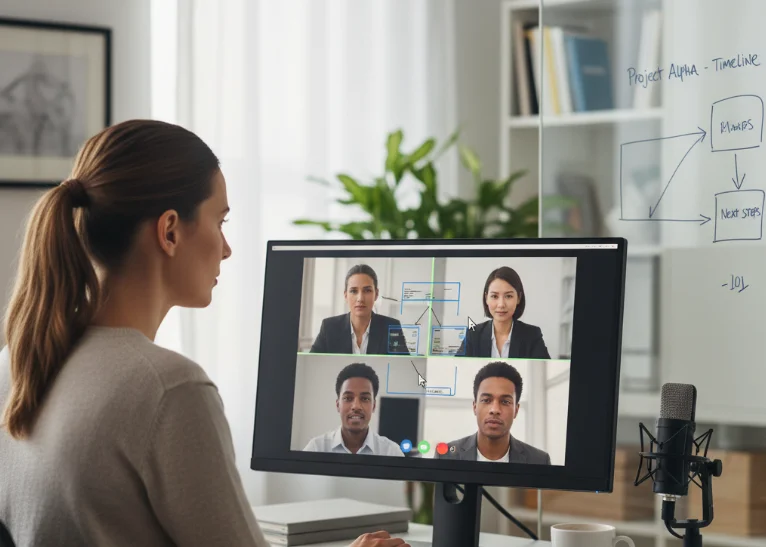
Remote work has transformed how organizations evaluate professional effectiveness, communication ability, and team dynamics. Hiring managers are no longer focused only on technical expertise or individual productivity. They also assess whether candidates can collaborate successfully across distributed teams, time zones, digital workflows, and asynchronous communication environments. In many industries, remote collaboration has become a core business skill rather than an optional advantage.
Recruiters carefully examine resumes for signals that suggest a candidate can work effectively without constant supervision while still maintaining strong communication, accountability, and coordination with others. Strong remote collaborators are often viewed as reliable, adaptable, organized, and emotionally intelligent professionals who can contribute positively to distributed workplace cultures. Understanding the resume patterns and professional signals that indicate remote collaboration strength can help candidates position themselves more competitively in modern hiring environments.
Understanding Collaboration in Remote Work Environments
Collaboration in remote environments refers to the ability to work productively with colleagues, stakeholders, clients, and leadership teams while operating through digital communication systems rather than shared physical office spaces.
Remote collaboration requires more than basic communication skills. Professionals must often manage:
- Asynchronous communication workflows
- Cross-functional coordination
- Digital project management systems
- Virtual meetings and presentations
- Distributed team alignment
- Independent execution with team accountability
- Cross-cultural communication
Hiring managers understand that remote work can expose weaknesses in organization, responsiveness, communication clarity, and team engagement. Because of this, they actively search for indicators that suggest candidates can maintain strong collaboration standards in distributed work environments.
Why Hiring Managers Prioritize Remote Collaboration Skills
Remote and hybrid work models require organizations to rely heavily on trust, communication efficiency, and operational coordination. Professionals who struggle with collaboration in remote environments may create delays, misunderstandings, reduced accountability, or weakened team cohesion.
Hiring managers prioritize remote collaboration skills because strong collaborators often:
- Improve workflow coordination
- Reduce communication gaps
- Support faster project execution
- Strengthen distributed team culture
- Handle ambiguity effectively
- Maintain productivity independently
- Contribute positively across departments
Candidates who demonstrate these abilities are often viewed as lower-risk hires for remote-first or hybrid organizations.
Resume Signals That Suggest Strong Remote Collaboration
Cross-Functional Communication Experience
One of the strongest indicators of remote collaboration ability is experience working across departments, functions, or stakeholder groups. Recruiters often interpret cross-functional coordination as evidence that the candidate can communicate effectively with diverse teams and maintain alignment in distributed environments.
Strong resume examples may include:
- Coordinated product initiatives between engineering and marketing teams
- Facilitated communication across operations and customer success departments
- Managed stakeholder updates during remote project implementations
These examples suggest organizational awareness, communication discipline, and collaborative execution capability.
Success in Asynchronous Workflows
Remote environments frequently rely on asynchronous communication where team members work across different schedules or time zones. Hiring managers look for evidence that candidates can operate efficiently without requiring constant supervision or immediate responses.
Signals of asynchronous collaboration strength include:
- Managing distributed projects across time zones
- Maintaining workflow visibility through documentation
- Supporting remote coordination through digital systems
- Improving communication processes for distributed teams
Candidates who demonstrate structured communication habits often appear more reliable in remote settings.
Remote Project Coordination and Execution
Recruiters pay close attention to project coordination experience because remote collaboration depends heavily on organization and execution discipline.
Candidates who managed timelines, aligned stakeholders, facilitated remote meetings, or coordinated deliverables across teams often appear highly capable in distributed environments.
Strong examples include:
- Led virtual project implementation initiatives
- Coordinated remote onboarding processes
- Managed distributed workflow tracking systems
- Improved remote communication procedures during scaling periods
These accomplishments suggest strong organizational and collaboration capabilities.
Relationship Building Across Distributed Teams
Remote collaboration is not only operational. It also involves relationship management and team trust. Hiring managers often value candidates who can maintain positive professional relationships without relying on in-person interaction.
Signals of strong relationship-building ability include:
- Mentoring remote team members
- Supporting cross-regional collaboration
- Facilitating knowledge-sharing initiatives
- Maintaining long-term client relationships remotely
Candidates who demonstrate empathy, communication consistency, and team support often strengthen perceptions of remote collaboration capability.
Language Patterns That Reflect Collaborative Strength
The language used throughout a resume significantly shapes recruiter perception. Certain action verbs and phrases naturally communicate collaboration, coordination, and communication effectiveness.
Strong collaborative action verbs include:
- Coordinated
- Facilitated
- Collaborated
- Partnered
- Aligned
- Supported
- Communicated
- Integrated
- Led
- Organized
Effective collaboration-focused phrases include:
- Improved communication visibility across distributed teams
- Facilitated cross-functional alignment during remote projects
- Strengthened collaboration between geographically dispersed stakeholders
- Supported operational coordination in remote-first environments
This language creates a stronger impression than generic statements such as team player or excellent communicator.
Leadership Signals in Remote Team Environments
Hiring managers often associate remote collaboration strength with leadership capability. Distributed environments require professionals who can take initiative, communicate proactively, and maintain accountability without direct supervision.
Leadership-related collaboration signals include:
- Leading remote project teams
- Managing virtual stakeholder communication
- Supporting distributed onboarding initiatives
- Implementing workflow coordination systems
- Facilitating remote knowledge-sharing programs
Candidates who demonstrate operational leadership in remote environments often appear highly adaptable and trustworthy.
Industry-Specific Indicators of Remote Collaboration
Technology and Engineering Teams
Technology recruiters often evaluate collaboration through agile coordination, remote sprint management, product communication, and engineering alignment across distributed teams.
Candidates who contributed to collaborative software development or managed remote technical coordination frequently stand out.
Marketing and Creative Departments
Marketing recruiters value remote collaboration through campaign coordination, content workflow management, creative alignment, and client communication across digital environments.
Strong remote marketers often demonstrate organization, communication clarity, and collaborative campaign execution.
Operations and Business Functions
Operations professionals demonstrate collaboration strength through workflow coordination, process documentation, stakeholder management, and cross-department execution.
Hiring managers often prioritize operational discipline and communication consistency in distributed business environments.
Customer Success and Support Roles
Customer-facing professionals demonstrate remote collaboration ability through relationship management, issue resolution, remote onboarding support, and communication responsiveness.
Recruiters often evaluate emotional intelligence and communication professionalism carefully in these roles.
Resume Red Flags That Suggest Weak Remote Collaboration
Certain resume patterns may cause hiring managers to question remote collaboration ability:
- Excessive focus on isolated individual contributions
- Lack of cross-functional experience
- Minimal communication or coordination examples
- Vague descriptions of teamwork responsibilities
- Repeated short-term projects without collaboration context
- Limited evidence of stakeholder interaction
Recruiters may interpret these patterns as signs that the candidate struggles with communication, teamwork, or distributed coordination.
How Candidates Can Demonstrate Strong Remote Collaboration Effectively
Candidates can strengthen their resumes by focusing on collaborative outcomes rather than only individual achievements.
Helpful strategies include:
- Highlighting cross-functional initiatives
- Showing remote communication experience
- Describing stakeholder coordination responsibilities
- Demonstrating project alignment across teams
- Including examples of distributed workflow management
- Emphasizing relationship-building and support initiatives
Candidates should also explain how collaboration contributed to operational improvements, project success, customer outcomes, or team efficiency.
Strong remote collaboration resumes communicate organization, accountability, responsiveness, and communication discipline naturally through achievement descriptions.
ATS Optimization and Resume Keywords
Applicant Tracking Systems frequently scan resumes for collaboration-related terminology, especially for remote and hybrid roles.
Useful keywords include:
- Cross-functional collaboration
- Remote team coordination
- Stakeholder communication
- Workflow management
- Project coordination
- Distributed teams
- Operational communication
- Virtual collaboration
- Asynchronous workflows
- Team alignment
Keywords should be integrated naturally within meaningful accomplishment statements rather than inserted artificially.
Final Thoughts
Hiring managers evaluate remote collaboration by looking for patterns of communication, coordination, accountability, and relationship management throughout a candidate’s resume. Strong collaborators are viewed as professionals who can maintain productivity, alignment, and positive team dynamics even without direct in-person supervision.
Candidates who demonstrate cross-functional coordination, asynchronous workflow management, project organization, and stakeholder communication often appear highly capable in remote-first environments. Recruiters value professionals who combine independent execution with strong collaborative discipline.
Remote collaboration is ultimately about trust, communication consistency, and operational reliability. A thoughtfully structured resume that highlights these qualities can significantly strengthen a candidate’s competitiveness in modern distributed workplaces.