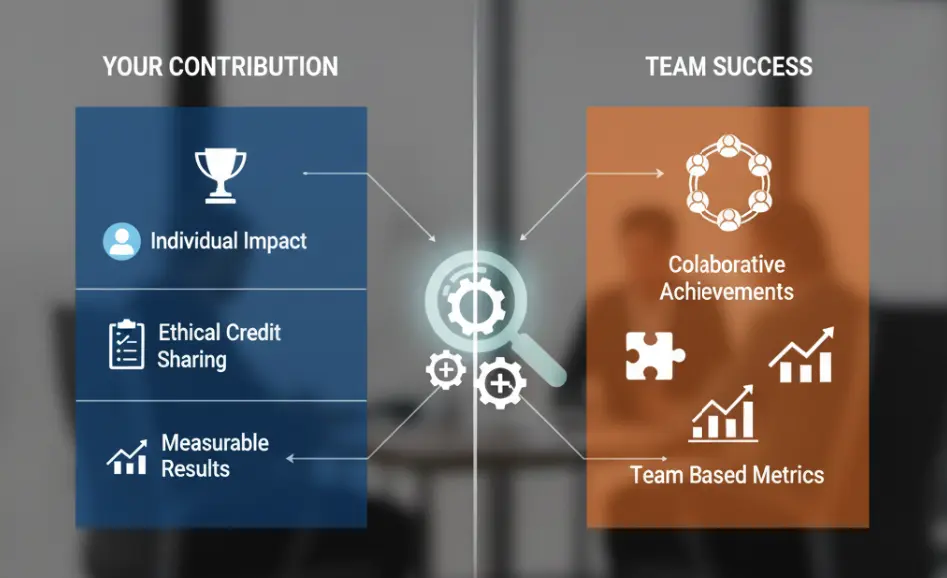
Modern workplaces rely heavily on collaboration. Most significant business results come from teams rather than individuals working in isolation. Because of this reality, professionals often face a common challenge when writing resumes or describing accomplishments. They must communicate measurable results that came from a group effort while still explaining their individual contributions honestly. Recruiters expect candidates to demonstrate both teamwork and personal accountability. Presenting team metrics effectively requires balancing credit sharing with clear explanation of personal impact. When done properly, candidates can show that they contributed meaningfully to large outcomes without exaggerating their role.
Why Presenting Team Metrics Correctly Matters
Hiring managers understand that many business achievements involve cross functional teams. Large initiatives such as product launches, marketing campaigns, operational transformations, and technology implementations rarely depend on a single contributor. However recruiters still need to understand what specific value each candidate delivered.
When candidates present team metrics inaccurately or imply sole ownership of collaborative outcomes, it can create credibility concerns during interviews. Experienced hiring managers quickly recognize when a result required multiple contributors. Honest and clear explanations build trust while still demonstrating professional impact.
Presenting team metrics correctly also highlights an important professional quality which is collaboration. Employers look for individuals who can contribute effectively within teams while still delivering meaningful work independently.
Difference Between Individual Achievements and Team Results
Individual Contribution
Individual achievements describe results directly produced through a person work. These accomplishments often involve tasks or initiatives where the candidate had primary ownership or full responsibility. Examples may include designing a process improvement, closing a specific sales contract, or launching a tool that automated a workflow.
In these cases it is appropriate to present metrics as direct personal outcomes because the candidate clearly drove the result.
Collective Team Outcomes
Team outcomes represent achievements produced through coordinated efforts from multiple contributors. Projects involving marketing teams, engineering groups, product managers, analysts, and operational staff often produce results that no single person can claim entirely.
Examples include increasing company revenue through a new product launch, improving customer retention through a cross department initiative, or expanding a platform to support a large number of users. In these situations candidates must describe the shared outcome while explaining how their specific role contributed to the success.
Ethical Ways to Present Team Metrics
Clarify Your Role in the Team
The most important step when presenting team metrics is explaining your role clearly. Recruiters want to understand what part of the initiative you were responsible for and how your work supported the final outcome. This may involve describing tasks such as designing components of a system, analyzing performance data, coordinating project timelines, or leading specific sub projects.
By defining your role precisely you provide transparency while still connecting your work to the broader success of the team.
Acknowledge Shared Success
Acknowledging shared credit demonstrates professionalism and leadership maturity. Strong candidates show respect for collaborative efforts while still presenting measurable achievements. Instead of presenting a metric as a purely personal accomplishment, it is often more accurate to describe participation within a team initiative that produced the result.
This approach signals honesty and reinforces the idea that the candidate works effectively in collaborative environments.
Highlight Supporting Contributions
Even when results belong to a larger team effort, your individual contributions still matter. Supporting work such as research, process design, implementation, analysis, or coordination can significantly influence project success. Candidates should emphasize how their work enabled the team to achieve the final outcome.
For example designing a data dashboard that helped leadership monitor campaign performance may indirectly contribute to improved marketing results. Highlighting these supporting contributions helps clarify personal value.
How to Structure Team Achievements on a Resume
Provide Context Before Metrics
Effective resume writing often begins with context. Briefly describing the project or initiative helps recruiters understand the scale and purpose of the achievement. Context might include the type of initiative, team size, or organizational objective involved.
Once the context is clear the candidate can present the measurable result produced by the team.
Describe Your Actions Clearly
After presenting the team result candidates should explain the actions they personally performed. These actions might include leading research, building a technical component, coordinating stakeholders, or implementing a specific operational improvement.
Action oriented descriptions make it easier for recruiters to evaluate the candidate actual contributions.
Connect Actions to Measurable Results
The final step is linking personal actions to measurable outcomes. Even when the result belongs to a team effort, candidates can still demonstrate how their contributions influenced performance improvements. This approach ensures that achievements remain both measurable and credible.
Discussing Team Results During Interviews
Interviews provide an opportunity to explain team metrics in greater detail. Hiring managers often ask follow up questions about project structure, decision making processes, and individual responsibilities. Candidates should be prepared to discuss the timeline of the project, the roles of different team members, and the specific tasks they performed.
Clear explanations help interviewers understand how the candidate collaborates with others and contributes to complex initiatives. Candidates who demonstrate both ownership and teamwork often leave a stronger impression during these conversations.
Common Mistakes When Presenting Team Metrics
One common mistake is claiming full credit for results that clearly required multiple contributors. This approach may appear misleading during interviews when hiring managers ask detailed questions about project responsibilities.
Another mistake is avoiding metrics entirely because the results came from a team. Even if the outcome was collective, measurable achievements still demonstrate the scale and success of the initiative.
A third mistake is failing to explain personal contributions. Listing a large team achievement without describing your role leaves recruiters uncertain about your value within the project.
Conclusion
Presenting team metrics effectively requires honesty, clarity, and thoughtful communication. Professionals should highlight measurable results produced by collaborative initiatives while clearly explaining their individual contributions. By defining roles, acknowledging shared success, and connecting personal actions to team outcomes, candidates can demonstrate both accountability and teamwork. Employers value individuals who contribute meaningfully to group achievements without exaggerating their influence. When candidates present team metrics transparently they strengthen credibility and show the collaborative skills that modern organizations depend on.