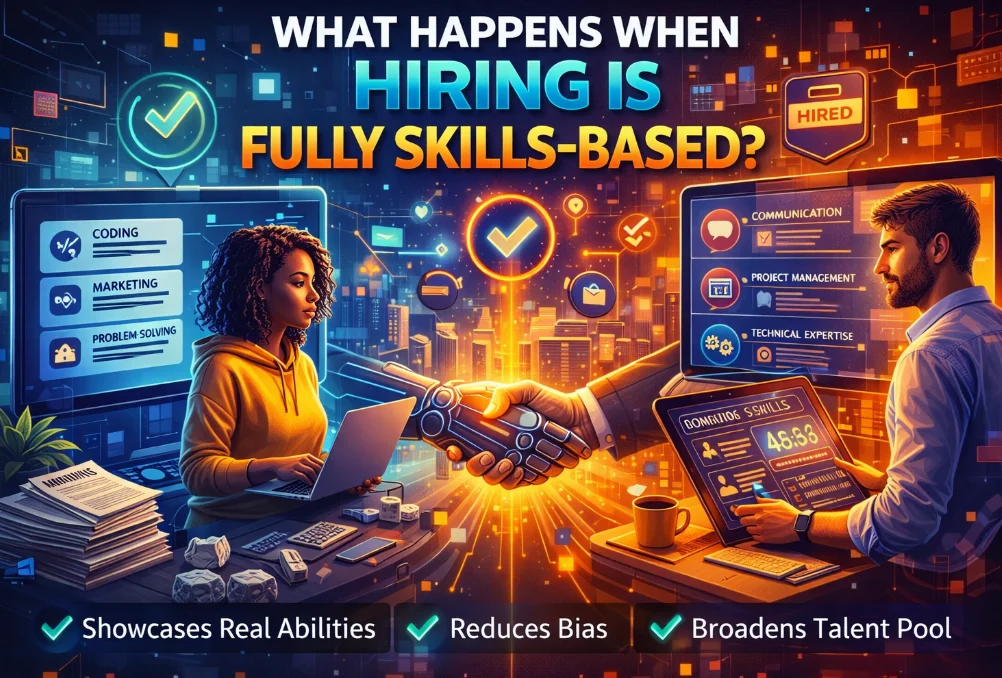
The hiring landscape is undergoing a major transformation as organizations shift their focus from traditional qualifications to practical skills. Skills based hiring emphasizes what candidates can do rather than where they studied or how many years of experience they have. This approach is gaining momentum as companies seek more accurate ways to identify talent and improve hiring outcomes. As this trend continues, it is important to understand what happens when hiring becomes fully skills based and how it affects both candidates and employers.
Understanding Skills Based Hiring
What Is Skills Based Hiring
Skills based hiring is an approach that prioritizes a candidate’s abilities and competencies over traditional indicators such as degrees or job titles. It focuses on evaluating whether a candidate can perform the tasks required for a role.
How It Differs from Traditional Hiring
Traditional hiring often relies on resumes, educational qualifications, and past job titles. Skills based hiring shifts the focus to practical assessments, certifications, and demonstrated capabilities. This creates a more performance oriented evaluation process.
Why Companies Are Moving Toward Skills Based Hiring
Need for Efficient Hiring
Organizations are seeking faster and more accurate ways to identify suitable candidates. Skills based hiring reduces reliance on indirect indicators and focuses on measurable abilities, improving efficiency.
Addressing Talent Gaps
Many industries face shortages of qualified talent. By focusing on skills rather than formal qualifications, companies can access a broader pool of candidates and fill roles more effectively.
Impact on Candidates
Increased Opportunities
Candidates without traditional qualifications may gain access to opportunities based on their skills. This creates a more inclusive hiring environment and allows diverse talent to emerge.
Greater Focus on Skill Development
Professionals are encouraged to continuously develop and update their skills. Practical experience and certifications become more valuable than static credentials.
Impact on Employers
Improved Candidate Matching
Employers can better match candidates to roles by directly assessing their abilities. This reduces the likelihood of hiring mismatches and improves job performance.
Reduction in Hiring Bias
Skills based hiring can reduce bias related to education, background, or previous employers. By focusing on performance, organizations can create a more fair and objective hiring process.
What Happens to Resumes in Skills Based Hiring
Resumes are likely to evolve rather than disappear. Instead of focusing on job titles and responsibilities, they may highlight skills, projects, and measurable achievements. Digital profiles and skill portfolios may complement traditional resumes, providing a more comprehensive view of a candidate’s abilities.
Challenges of Fully Skills Based Hiring
Implementing a fully skills based system presents challenges such as designing effective assessments, ensuring consistency in evaluation, and managing large volumes of candidates. Some roles may require long term evaluation that cannot be captured through short assessments. Additionally, not all skills are easily measurable.
Future of Recruitment and Workforce Development
The future of recruitment is likely to integrate skills based hiring with traditional methods. Organizations may use a combination of resumes, assessments, and digital profiles to evaluate candidates. This hybrid approach can provide both context and measurable insights.
How Professionals Should Prepare
Professionals should focus on building practical skills and gaining real world experience. Creating portfolios, earning certifications, and continuously learning can enhance employability. Maintaining a clear and updated resume that highlights skills and achievements remains important.
Conclusion
Fully skills based hiring represents a shift toward more accurate and inclusive evaluation of talent. While it offers many benefits, it also comes with challenges that need to be addressed. Rather than replacing traditional methods entirely, it is likely to complement them. By adapting to this change, both candidates and employers can benefit from a more effective and fair hiring process.