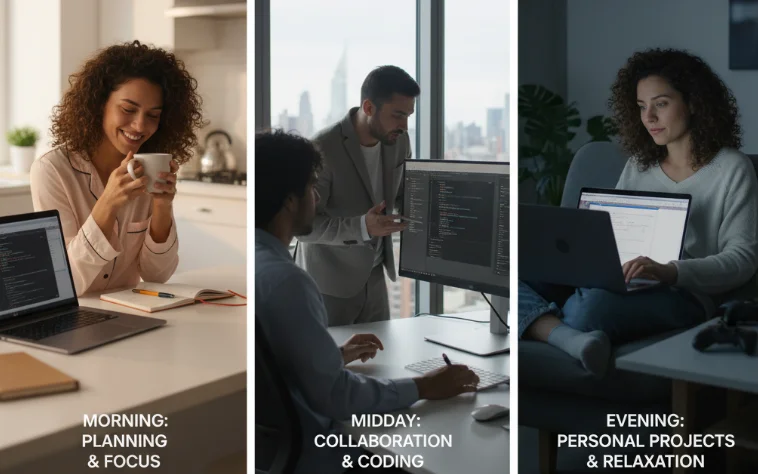
A developer’s day is usually a mix of focused coding, problem-solving, learning, and communication. It may look like just sitting in front of a screen and typing code, but in reality, it involves structure, decision-making, and continuous thinking throughout the day.
In this post, I’ll walk through a typical day in my life as a developer and how I balance productivity, learning, and creativity.
Morning Routine and Setup
My day usually starts with a simple routine that helps me get into a focused mindset.
- I start by reviewing my goals for the day.
- I check emails, messages, and any project updates.
- I prepare my development environment and tools.
This helps me enter the day with clarity instead of confusion.
Planning the Workday
Before diving into coding, I plan what needs to be done.
- I prioritize tasks based on importance and deadlines.
- I break large features into smaller steps.
- I set realistic goals for the day.
Planning reduces distractions and improves focus.
Deep Work and Coding Sessions
Most of my productive time is spent in deep coding sessions.
- I work on implementing features and fixing bugs.
- I avoid unnecessary distractions during focused sessions.
- I try to stay in a flow state for better productivity.
This is where most real development progress happens.
Debugging and Problem Solving
Not everything works on the first try, and debugging is a big part of the job.
- I analyze errors and understand their root cause.
- I test different solutions step by step.
- I use tools like browser dev tools and logs for troubleshooting.
Problem-solving is often where the most learning happens.
Learning and Skill Improvement
I always dedicate time to learning new things.
- Exploring new frameworks or tools.
- Reading documentation and technical articles.
- Practicing coding challenges and exercises.
Continuous learning is essential to stay updated in tech.
Breaks and Mental Reset
Taking breaks is important for maintaining productivity.
- I step away from the screen after long sessions.
- I take short walks or relax to reset my mind.
- I avoid burnout by balancing work and rest.
Breaks help improve focus when I return to work.
Collaboration and Communication
Development is rarely a solo activity.
- I communicate with teammates or clients about progress.
- I participate in code reviews and discussions.
- I clarify requirements before implementing features.
Clear communication avoids misunderstandings and delays.
Wrapping Up the Day
At the end of the day, I review what I accomplished.
- I check completed tasks and pending work.
- I update project boards or notes.
- I plan priorities for the next day.
This reflection helps maintain consistency and direction.
Final Thoughts
A developer’s day is a balance of structure and flexibility. It includes coding, problem-solving, learning, and communication, all working together to build better software. With proper planning and discipline, each day becomes an opportunity to grow as a developer and improve both skills and mindset.