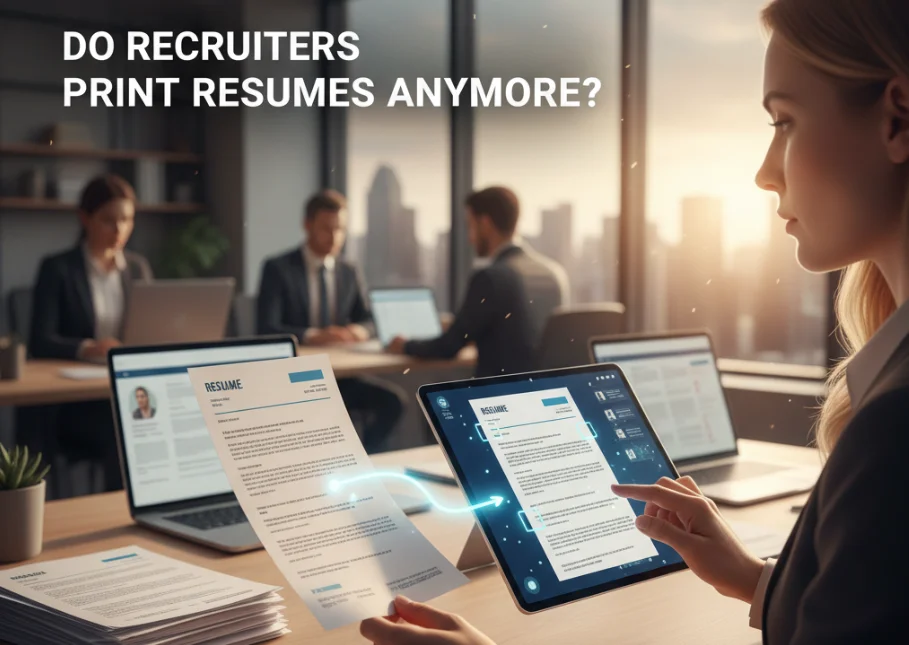
The hiring process has evolved significantly with the rise of digital tools and remote work environments. One common question among job seekers is whether recruiters still print resumes or rely entirely on digital formats. Understanding current practices can help candidates prepare better and ensure their resumes are optimized for how they are actually reviewed. While printing has not completely disappeared, it is no longer the primary method used by recruiters in most industries.
Evolution of Resume Handling
Traditional Paper Based Hiring
In earlier hiring processes, resumes were printed and physically reviewed. Recruiters maintained folders of candidate profiles, and interviews often involved printed copies for reference. This method required manual organization and made it difficult to manage large volumes of applications.
Shift to Digital Recruitment
With the introduction of online job portals and recruitment software, hiring has become more efficient. Digital resumes allow recruiters to search, filter, and manage candidates quickly. This shift has reduced the dependency on printed documents and improved overall productivity.
Current Hiring Practices
Use of Applicant Tracking Systems
Most organizations now use applicant tracking systems to manage applications. These systems store resumes digitally and allow recruiters to review, shortlist, and share profiles without printing. They also enable keyword searches, making it easier to identify suitable candidates.
Screen Based Resume Review
Recruiters typically review resumes on screens such as laptops, tablets, or mobile devices. This allows quick scanning and comparison of multiple candidates. Digital review is faster, more flexible, and environmentally efficient compared to printing.
When Recruiters Still Print Resumes
During In Person Interviews
In some cases, recruiters or interviewers may print resumes for in person interviews. Having a physical copy can make it easier to refer to details during discussions. However, this practice is becoming less common as many interviews shift to digital formats.
Panel or Senior Level Discussions
For senior level roles or panel interviews, printed resumes may still be used. Multiple interviewers may prefer having individual copies for detailed evaluation. This is more likely in traditional organizations or high level decision making processes.
Low Tech or Offline Environments
In certain environments where digital tools are limited, printed resumes may still be used. This is more common in smaller organizations or industries that have not fully adopted digital hiring practices.
What This Means for Job Seekers
Resume Formatting Importance
Since most resumes are reviewed digitally, formatting should prioritize clarity and readability on screens. Simple layouts, clear headings, and proper spacing make it easier for recruiters to scan information quickly.
Focus on Digital Readability
Avoid overly complex designs or heavy graphics that may not display properly on different devices. Use standard fonts and ensure that the resume is easy to read both on large screens and mobile devices.
Keeping a Printed Backup
Although digital formats dominate, it is still advisable to carry a printed copy during interviews. This shows preparedness and ensures you are ready for situations where a physical copy may be needed.
Best Practices for Modern Resumes
Modern resumes should be optimized for both digital and occasional print use. Use a clean structure, include relevant keywords, and highlight achievements clearly. Ensure that your resume file is properly named and easily accessible. Keeping the design simple ensures compatibility across platforms.
Common Myths About Printed Resumes
One common myth is that printed resumes are outdated and no longer needed. While less common, they still have situational value. Another misconception is that digital resumes do not require formatting, which is incorrect. Poor formatting can negatively impact readability and reduce chances of selection.
Conclusion
Recruiters today primarily rely on digital resumes, making printing less common than in the past. However, printed resumes are not completely obsolete and may still be used in specific situations such as in person interviews or panel discussions. Job seekers should focus on creating resumes that are optimized for digital review while also being prepared with a printed copy when needed. Understanding these practices helps candidates present themselves more effectively and adapt to modern hiring processes.