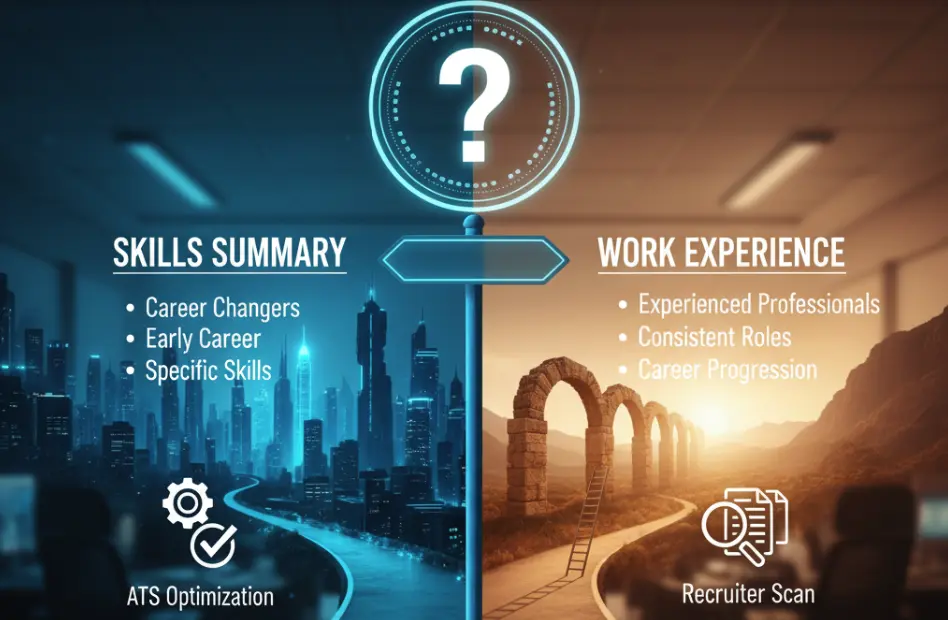
One of the most common resume questions professionals ask is where the document should actually begin. Some resumes start with a summary, others begin with a list of skills, while many open directly with work experience. The order of these sections may seem like a small formatting decision, but it can significantly influence how recruiters interpret a candidate profile. Hiring managers typically spend only a few seconds scanning a resume during the initial review stage, which means the first section they see shapes their first impression. Choosing whether to start with skills, a summary, or experience should therefore be a strategic decision based on career stage, industry expectations, and the specific job being targeted.
Why Resume Section Order Matters
Resume structure determines how quickly recruiters can understand a candidate value. Because recruiters scan resumes quickly, the most important information should appear near the top. The first section should immediately communicate the candidate relevance for the role.
A well structured resume helps employers answer several key questions quickly. These questions include what the candidate does professionally, what skills they bring, and what results they have achieved. If the most relevant information appears later in the document, recruiters may never reach it during their quick review.
For this reason the ideal starting section depends on which part of a candidate profile is strongest and most relevant to the position.
Starting With a Resume Summary
When a Summary Works Best
A resume summary is a short professional overview that appears near the top of a resume. It typically highlights experience level, areas of expertise, and key accomplishments. Starting with a summary works best for professionals who already have several years of experience and want to quickly position themselves for a specific role.
This approach is especially effective when candidates want to present a clear professional identity. For example marketing specialists, software developers, project managers, or analysts often use summaries to highlight their main strengths and career focus before presenting detailed experience.
Advantages of Using a Summary First
A strong summary helps recruiters quickly understand a candidate background. It also allows job seekers to highlight their most impressive achievements before the reader reviews the rest of the document. This approach is useful when a candidate has diverse experience but wants to emphasize a specific professional direction.
Another advantage is that a summary can incorporate important keywords related to the job description. These keywords help resumes perform better in applicant tracking systems used by many employers.
Starting With a Skills Section
When Skills Should Come First
Beginning a resume with a skills section is common in technical or specialized fields where specific abilities are critical for the role. Technology professionals, designers, engineers, and data analysts often highlight skills early because employers prioritize technical capabilities during screening.
A skills first approach is also useful for career changers. When transitioning into a new field, candidates may not yet have extensive experience in that industry. Highlighting transferable skills allows them to demonstrate relevant abilities even if their previous roles were in different sectors.
Benefits of a Skills First Resume
Leading with skills helps recruiters immediately identify whether a candidate meets basic job requirements. This can be especially important when employers are scanning resumes quickly to confirm familiarity with certain tools, technologies, or methodologies.
A well organized skills section also improves readability. Recruiters can quickly see whether the candidate possesses the core competencies needed for the position.
Starting With Work Experience
When Experience Should Be First
Many traditional resumes begin directly with work experience. This format works well for candidates with a stable career path and strong employment history. When previous roles clearly demonstrate qualifications for the target position, presenting experience immediately can be the most straightforward approach.
Professionals with several years of consistent experience in the same industry often benefit from this structure. Recruiters can quickly evaluate career progression, responsibilities, and achievements.
Advantages of Leading With Experience
Work experience provides concrete evidence of a candidate professional abilities. It shows how skills were applied in real workplace environments and what results were achieved. When experience aligns closely with the job description, placing this section first allows recruiters to quickly confirm relevance.
Another advantage is credibility. Detailed employment history demonstrates practical knowledge and real world accomplishments, which often carry more weight than standalone skills lists.
How to Choose the Right Structure
Choosing the correct resume structure requires evaluating your strongest qualifications and the expectations of the industry you are targeting. Professionals with extensive experience often benefit from a summary followed by work experience. Technical specialists may prioritize skills to demonstrate capability quickly. Candidates with clear career progression may choose to start with experience to showcase their track record.
Another factor to consider is the job description. If a position emphasizes specific technical competencies, highlighting skills early can help your resume pass screening systems and recruiter reviews. If the role focuses on leadership, strategy, or results, experience and achievements may be more important.
Ultimately the goal of resume structure is clarity. The first section should immediately communicate why the candidate is relevant for the role.
Common Resume Structure Mistakes
One common mistake is placing too many sections before the most important information. Long objective statements, unrelated achievements, or excessive formatting elements can push key details further down the page. Recruiters may lose interest before reaching the most relevant content.
Another mistake is using a skills section that lists abilities without context. Skills are most effective when supported by real examples in the experience section. Candidates should ensure that their skills align with actual professional achievements.
A final mistake is using the same resume structure for every job application. Different roles may require different emphasis, and adjusting section order can improve relevance for each opportunity.
Conclusion
There is no single correct way to start a resume. The best opening section depends on a candidate career stage, professional strengths, and the requirements of the target job. A summary works well for experienced professionals who want to quickly communicate their value. A skills section is ideal when technical abilities are central to the role or when transitioning careers. Starting with experience is effective when previous roles clearly demonstrate qualifications. By selecting the structure that highlights their strongest assets, candidates can create resumes that capture recruiter attention quickly and present their professional story more effectively.