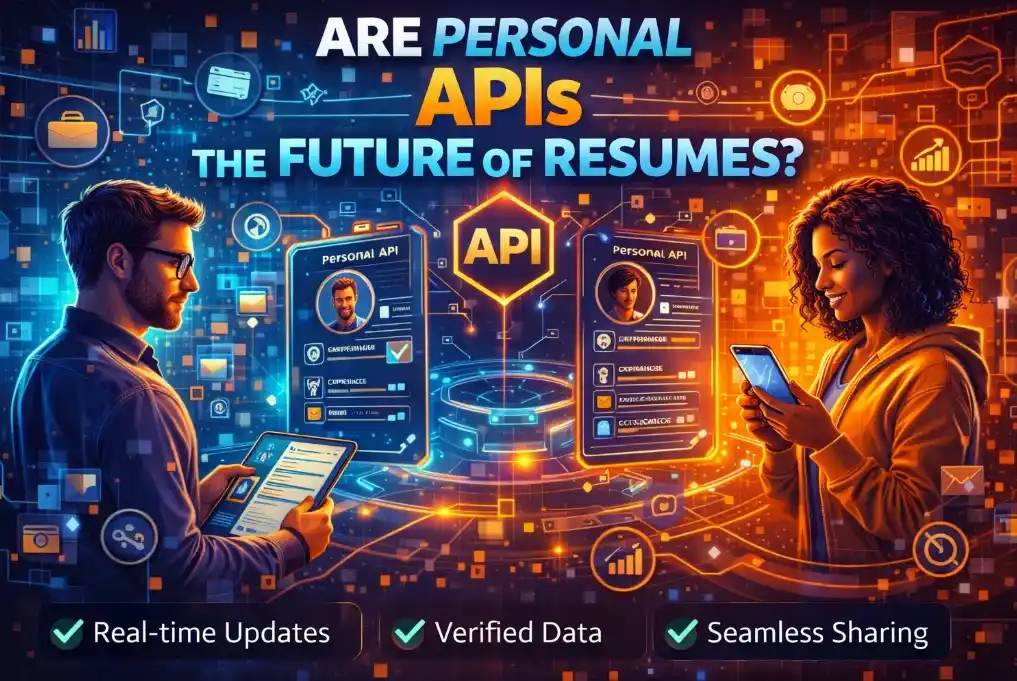
The concept of resumes is evolving as technology continues to reshape how professionals present their skills and how employers evaluate candidates. Traditional resumes provide a static snapshot of a candidate’s qualifications, but modern hiring demands more dynamic, accurate, and real time information. Personal APIs are emerging as a potential innovation that could transform resumes into live, interactive data sources. This raises an important question about whether personal APIs could become the future standard for representing professional identity.
Understanding Personal APIs
What Is a Personal API
A personal API is a digital interface that allows individuals to share structured and continuously updated information about their skills, experience, achievements, and professional activities. Instead of sending a static document, candidates provide access to a data source that can be queried and updated in real time.
How Personal APIs Function
Personal APIs collect data from various sources such as work projects, certifications, learning platforms, and performance metrics. This data is organized into a structured format that employers or hiring systems can access to evaluate candidates more effectively.
The Evolution of Resumes
Traditional Resume Limitations
Traditional resumes are static and require manual updates. They may quickly become outdated and often rely on self reported information. This can lead to inaccuracies and incomplete representations of a candidate’s capabilities.
Shift Toward Digital Profiles
Digital profiles have already begun to replace paper resumes in many cases. These profiles allow for continuous updates and provide more detailed information, setting the stage for more advanced solutions like personal APIs.
Personal APIs Versus Traditional Resumes
Dynamic and Real Time Data
Personal APIs provide real time updates, ensuring that the information presented is always current. This contrasts with static resumes, which may not reflect recent achievements or skill development.
Customization for Employers
Employers can query specific data points from a personal API, allowing for tailored evaluation based on job requirements. This level of customization is not possible with traditional resumes.
Benefits of Personal APIs in Hiring
Improved Data Accuracy
Since personal APIs integrate data from verified sources, they can provide more accurate and reliable information. This reduces the risk of misrepresentation.
Automation and Efficiency
Hiring systems can automatically retrieve and analyze data from personal APIs, reducing manual effort and speeding up the recruitment process.
Integration with Hiring Systems
Personal APIs can integrate seamlessly with applicant tracking systems and other hiring tools, enabling more efficient candidate evaluation and decision making.
Challenges and Risks
Despite their potential, personal APIs face several challenges. Standardization is a major concern, as different platforms may use different formats and structures. Privacy and data security are also critical issues, as individuals need to control who can access their information. Additionally, widespread adoption may take time, as both candidates and employers need to adapt to new technologies.
Future of Resumes and Hiring Technology
The future of resumes is likely to involve a combination of traditional formats and advanced digital solutions. Personal APIs may become an important tool for providing detailed and dynamic information, while resumes will continue to offer a structured overview. This hybrid approach can enhance both efficiency and clarity in the hiring process.
How Professionals Should Prepare
Professionals should focus on maintaining accurate and up to date digital profiles. Building a strong online presence, documenting achievements, and organizing data effectively can help prepare for potential adoption of personal APIs. Understanding how to present information in a structured format will also be valuable.
Conclusion
Personal APIs represent a significant shift in how professional information is shared and evaluated. By providing real time, accurate, and customizable data, they have the potential to transform hiring processes. However, challenges related to standardization and privacy must be addressed before widespread adoption. Rather than replacing resumes entirely, personal APIs are likely to complement them and contribute to a more dynamic and efficient hiring ecosystem.