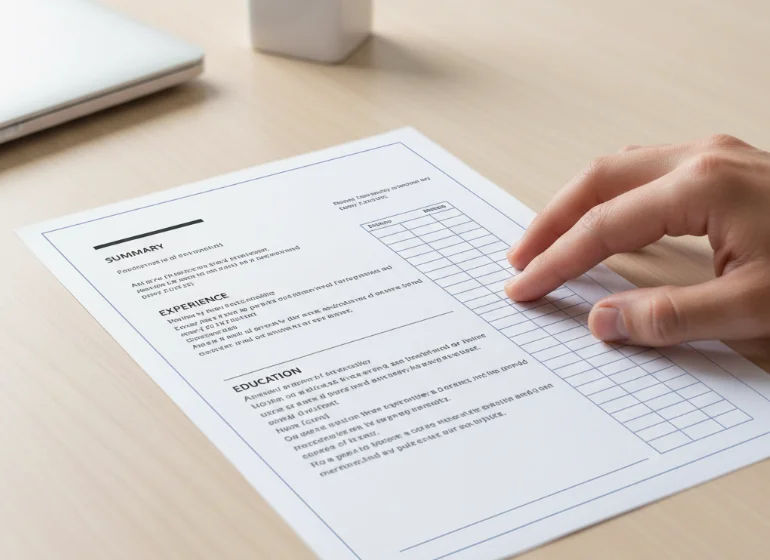
A structured and organized resume is one of the strongest indicators of professionalism during hiring evaluation. Before recruiters even analyze experience or skills, they form an impression based on how information is arranged, how easily it can be read, and how logically it flows. A well-structured resume communicates clarity of thought, discipline, and the ability to present complex information in a coherent way.
Hiring managers often equate resume structure with how a candidate organizes their work. If a resume is clear and logically arranged, it suggests the candidate likely applies the same level of organization in their professional responsibilities. Conversely, a poorly structured resume can create confusion and reduce perceived credibility, even if the experience itself is strong.
Understanding Resume Structure and Organization
A structured resume is one where information is presented in a logical, predictable, and easy-to-follow format. Organization refers to how well the content is grouped, prioritized, and visually arranged.
At its core, structure includes:
- Clear sections such as summary, experience, skills, and education
- Logical ordering of information from most to least relevant
- Consistent formatting across all sections
- Easy readability with clean spacing and alignment
Organization ensures that recruiters can quickly understand a candidate’s career story without effort or confusion.
Why Structure Matters to Hiring Managers
Hiring managers review large volumes of resumes, often spending only seconds on initial screening. A structured resume helps them quickly identify key qualifications and career relevance.
Strong structure is associated with:
- Clear communication skills
- Professional discipline and attention to order
- Ability to prioritize important information
- Reduced cognitive load for the reader
If a resume is difficult to scan, recruiters may assume the candidate is similarly disorganized in execution.
Core Elements of a Structured Resume
Clear Visual and Information Hierarchy
A structured resume has a clear hierarchy that guides the reader’s attention. The most important information is immediately visible and supported by secondary details.
Strong hierarchy includes:
- Name and contact details at the top
- Summary or headline that defines positioning
- Experience section prioritized above less critical sections
- Bullet points that highlight key achievements first
This helps recruiters quickly identify relevance.
Consistent Formatting Throughout
Consistency is one of the strongest signals of structure. Inconsistent formatting creates visual confusion and reduces readability.
Strong formatting consistency includes:
- Uniform font style and size
- Consistent bullet point structure
- Standardized date formatting
- Aligned spacing between sections
Even small inconsistencies can make a resume feel chaotic.
Logical Flow of Career Information
A structured resume presents information in a natural, chronological, or functionally logical order. Hiring managers expect to see a clear progression of experience.
Logical flow typically means:
- Most recent experience first
- Progression of responsibility over time
- Related roles grouped or clearly connected
This helps recruiters understand career development without confusion.
Strong Section Separation
Clear separation between sections helps recruiters scan resumes efficiently. Each section should be visually distinct and easy to locate.
Strong sectioning includes:
- Distinct headings for each category
- Whitespace between sections for readability
- No overlapping or mixed content areas
This reduces cognitive effort and improves clarity.
How Language Contributes to Structure
Structure is not only visual; it is also linguistic. The way candidates phrase their experience contributes to perceived organization.
Strong language patterns include:
- Clear, concise bullet points
- Consistent tense usage
- Action-oriented statements
- Separation of responsibilities and achievements
Structured language helps recruiters quickly interpret meaning without ambiguity.
How Hiring Managers Interpret Content Organization
Hiring managers often evaluate whether information is prioritized effectively. A well-organized resume shows understanding of relevance and importance.
They typically look for:
- Key achievements placed at the top of bullet points
- Relevant experience emphasized over less relevant details
- Clear distinction between roles and responsibilities
Poor organization can make strong experience appear less impactful.
Structured vs Unstructured Resume Patterns
The difference between structured and unstructured resumes is immediately noticeable to recruiters.
Structured resumes:
- Easy to scan within seconds
- Have consistent formatting and flow
- Highlight achievements clearly
- Present a logical career story
Unstructured resumes:
- Mix responsibilities and achievements
- Lack consistent formatting
- Use inconsistent language or tense
- Are difficult to quickly interpret
Structure directly impacts perceived professionalism.
Industry Expectations for Resume Structure
Technology and Engineering
Technical resumes require high clarity due to complexity of skills and projects. Structure helps highlight systems, tools, and impact efficiently.
Operations and Business Roles
Operations roles value structured thinking, so resumes are expected to reflect process clarity and organizational discipline.
Marketing and Creative Fields
Even creative roles require structured resumes to ensure campaigns, results, and skills are easy to evaluate.
Finance and Consulting
These industries strongly prioritize structure due to analytical rigor. Poorly organized resumes are often quickly rejected.
Common Red Flags of Poor Structure
Certain issues immediately signal weak organization:
- Inconsistent formatting across sections
- Long unbroken paragraphs instead of bullet points
- Random ordering of experiences or skills
- Mixed timelines or unclear chronology
- Overcrowded or cluttered layout
These reduce readability and recruiter confidence.
How to Improve Resume Structure and Organization
Candidates can significantly improve structure by focusing on clarity and consistency.
Best practices include:
- Using clean templates with defined sections
- Maintaining consistent formatting throughout
- Prioritizing recent and relevant experience
- Using concise, well-structured bullet points
- Separating achievements from responsibilities
The goal is to make the resume easy to scan in under 10 seconds.
ATS and Structural Formatting Considerations
Applicant Tracking Systems rely on structured formatting to correctly parse resume data. Poor structure can lead to misclassification or missed keywords.
Important considerations include:
- Standard section headings for parsing
- Consistent bullet formatting
- Avoiding complex layouts or graphics
- Clear chronological ordering
Good structure improves both ATS performance and human readability.
Final Thoughts
A structured and organized resume reflects more than formatting quality. It signals clarity of thought, professional discipline, and the ability to communicate effectively. Hiring managers interpret strong structure as an indicator of how well a candidate manages complexity in real work situations.
Resumes that are easy to scan, logically organized, and consistently formatted create immediate trust. They help recruiters focus on content rather than deciphering layout. In competitive hiring environments, structure is often the first and most important signal of professionalism.