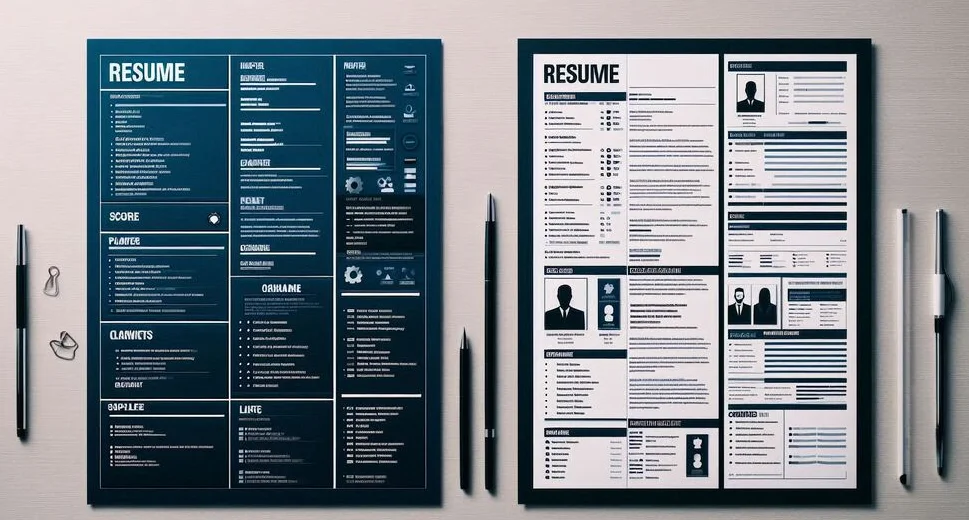
Your resume is often the first impression you make with potential employers, so it's essential that it conveys your qualifications, skills, and professionalism. But did you know that the layout of your resume can also play a significant role in shaping perceptions of your confidence? The design elements of your resume including the arrangement of text, use of white space, and overall structure can influence how employers view you. In this post, we'll explore how layout choices in your resume can either project confidence or insecurity, and how you can use design principles to make a strong, professional first impression.
Understanding Resume Layout Choices
When we talk about "layout" in the context of a resume, we refer to the arrangement of the sections, text, and overall structure. A well-organized layout ensures that the content is easy to read, highlights the most important information, and creates a sense of professionalism. Layout choices include the use of headings, spacing, margins, fonts, and the overall flow of information. These design choices not only help with readability but also set the tone of the document.
Importance of Resume Design
The design of your resume is more than just aesthetic it's about communicating who you are as a professional. A clean and well-thought-out layout reflects your ability to organize information, your attention to detail, and your understanding of design principles. A well-structured resume suggests that you approach your work with confidence and professionalism, which can make a lasting impression on hiring managers.
On the other hand, a cluttered or disorganized resume can suggest a lack of attention to detail, and it can undermine the value of your qualifications. If the employer struggles to navigate your resume, they might assume you’re not capable of organizing your thoughts clearly in a professional setting.
Psychology Behind Resume Layout Choices
There is a psychological component to how we perceive layouts, whether in resumes or other forms of design. For example, using a minimalistic layout with clean lines and organized sections can evoke feelings of trustworthiness and competence. Conversely, a resume that feels overcrowded or haphazard can create confusion and give the impression of insecurity. Design elements such as font choice, color, and spacing affect not only readability but also emotional response. Clean, consistent design signals confidence, while messy, inconsistent layouts suggest a lack of control.
How Resume Layout Affects Perception of Confidence
Your resume layout speaks volumes before you even begin discussing your qualifications. A well-thought-out design can suggest that you have a clear understanding of how to present yourself professionally, while a chaotic design might suggest the opposite. Let's dive into some layout characteristics that convey confidence versus insecurity.
Confident Resume Designs
Confident resume designs are clean, clear, and easy to navigate. These resumes use design principles that emphasize balance, symmetry, and sufficient white space. A resume that uses a simple, structured layout such as clear section headings, bullet points, and evenly spaced margins shows that you understand the importance of organization and professionalism. Key characteristics of confident resume designs include:
- Minimalist Design: A focus on essential information with minimal distractions, making the content easy to digest.
- Balanced Layout: Equal distribution of text and space, ensuring the resume doesn’t feel crowded or overwhelming.
- Clear Hierarchy: Strategic use of headings, bold text, and bullet points to guide the reader through the document.
- Professional Fonts: Clean, legible fonts that are easy on the eyes, such as Arial, Calibri, or Times New Roman.
- Ample White Space: Adequate spacing between sections and elements to prevent the resume from feeling cramped or cluttered.
Insecure Resume Designs
Insecure resume designs, on the other hand, tend to feel overcrowded, disorganized, and difficult to navigate. These resumes often have inconsistent formatting, excessive text, or lack clear structure. They can convey a sense of confusion and lack of attention to detail. Some signs of an insecure resume design include:
- Overcrowding: Too much text or too many elements crammed into the resume, making it hard for the reader to focus on important information.
- Lack of Structure: Sections that are poorly defined or inconsistent in formatting, such as random fonts or sizes.
- Poor Use of White Space: A resume that feels cramped with no breathing room or separation between sections.
- Distracting Colors: The use of too many bright colors or patterns, which can distract from the content.
- Inconsistent Alignment: Information that is not properly aligned or lacks symmetry can give an impression of unprofessionalism.
Practical Examples of Resume Layout Choices
Now let’s look at some real-world examples to illustrate the difference between confident and insecure resume designs.
Examples of Confident Resumes
A confident resume design might include a well-organized template that uses a clear, easy-to-read font and strategically places sections such as work experience, education, and skills in a logical order. For example, a resume designed in a two-column layout where personal details and skills are on the left, and work experience is on the right, can create a balanced, professional appearance. Websites like Canva and Adobe Spark offer templates that follow these best practices, ensuring your resume layout is both visually appealing and easy to navigate.
Examples of Insecure Resumes
An insecure resume design may include a cluttered one-page layout with multiple fonts, unnecessary graphics, and random bolding. The resume may feature dense paragraphs of text instead of concise bullet points, making it difficult for the reader to quickly scan and find key information. An overly creative design with too many colors, pictures, or intricate elements may distract the hiring manager from the important details of your qualifications and experience.
Conclusion
In conclusion, the layout of your resume is an essential aspect of how you present yourself to potential employers. A well-structured, confident resume can create a powerful first impression, signaling professionalism, organization, and confidence. On the other hand, an insecure layout can make it harder for hiring managers to trust your ability to communicate effectively and manage details. By focusing on clear organization, balance, and simplicity, you can create a resume that not only showcases your qualifications but also communicates your confidence as a professional.