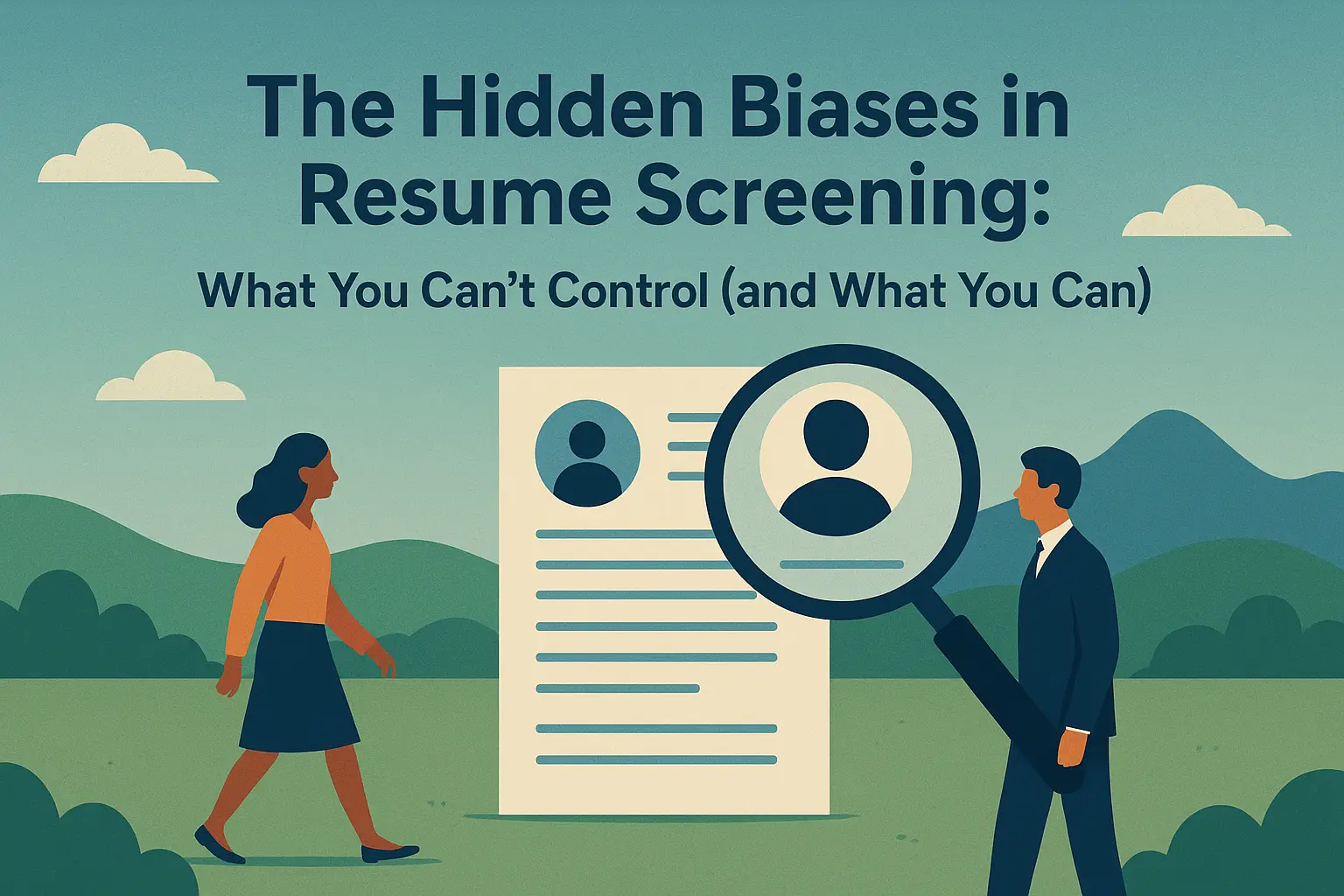
Every job seeker knows the sting of sending off countless resumes and hearing nothing back. But what if your rejection isn't about your skills or experience at all? What if hidden biases both human and algorithmic are deciding your fate before anyone even reads your resume?
Introduction
In 2025, most resumes are first reviewed not by humans, but by software. Applicant Tracking Systems (ATS) and AI filters determine whether a resume even reaches a recruiter. While these tools are efficient, they often come with built-in biases. On the other side, human screeners bring their own unconscious preferences. This post breaks down what parts of resume screening are out of your control—and what you can absolutely do to increase your chances.
What You Can't Control
Algorithmic Bias in ATS
ATS platforms rely on keyword-matching algorithms and machine learning models. These models are often trained on historical hiring data—which may reflect past biases. For example, if previous successful candidates came from certain schools or had specific job titles, the ATS may rank those resumes higher automatically. This creates a closed loop that penalizes candidates from non-traditional backgrounds.
Human Bias in First Impressions
Even if you pass the ATS, your resume lands on the desk of a human recruiter, who may be swayed by unconscious biases. Common factors include:
- Unfamiliar or ethnic-sounding names
- Graduation dates suggesting age
- Non-Ivy League education
- Gaps in employment history
Studies have shown that identical resumes with different names can have up to a 50% difference in callback rates. These are the types of bias that job seekers cannot control—but understanding them is the first step to navigating around them.
What You Can Control
Resume Formatting and Keywords
Your resume must speak ATS language. Focus on:
- Using job description keywords verbatim
- Avoiding tables, text boxes, and graphics
- Using a clean, chronological format
- Saving as a .docx or PDF based on application instructions
Many ATS tools cannot parse unusual formatting, causing resumes to be rejected automatically. Stick to simplicity and clarity to ensure your content is read by both machines and humans.
Demonstrating Impact with Metrics
While you can’t control bias, you can increase your chances by showing value in a concrete, measurable way. Instead of listing tasks, use STAR (Situation, Task, Action, Result) statements and back them with numbers.
- Increased web traffic by 40% in six months through SEO strategies
- Reduced onboarding time by 25% by revamping internal training process
- Led a team of 4 to launch a product that generated $250K in first-quarter revenue
These data points make you stand out, even to a biased eye—or algorithm.
Final Tips
While hidden biases in resume screening are real, they aren’t the whole story. Focus on optimizing what you can: tailoring keywords, using clean formatting, and quantifying achievements. Supplement your application with a strong LinkedIn presence and portfolio links when possible. And remember: every application is not a judgment of your worth, but of how well you navigated a flawed system.