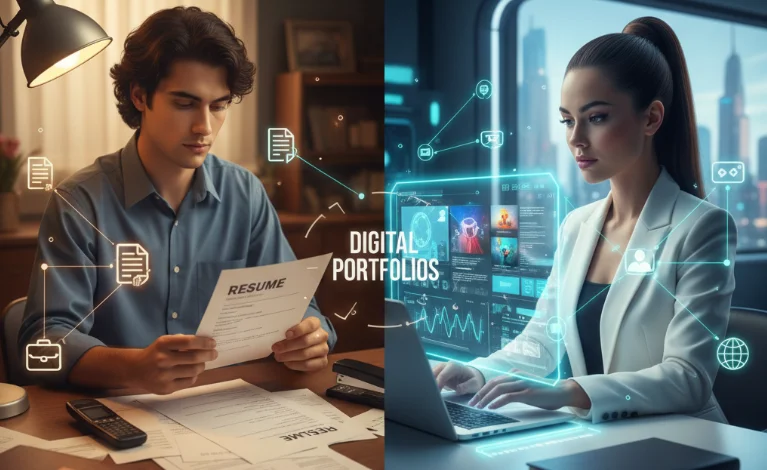
The way professionals present their careers has changed dramatically over the past two decades. What once existed only as a paper resume has now evolved into dynamic digital portfolios and interactive resume websites. This transformation reflects broader changes in hiring practices, technology adoption, and the growing importance of personal branding in the digital world.
Today, employers no longer rely solely on static documents. Instead, they evaluate candidates through websites, portfolios, online profiles, and project showcases that demonstrate real skills and measurable impact. This shift has made digital portfolios and resume sites essential tools for modern professionals.
Understanding this evolution helps job seekers build stronger career identities and present their work more effectively in competitive job markets.
How Digital Portfolios Evolved
From Paper Resumes to PDFs
The earliest form of career documentation was the printed resume. Candidates would physically submit typed documents that listed education, experience, and skills. With the rise of computers and email, resumes transitioned into PDF formats.
This shift introduced several improvements:
- Easier sharing through email
- Standardized formatting
- Faster application processes
- Wider accessibility for employers
However, PDF resumes remained static and limited in how much a candidate could demonstrate beyond text.
Rise of Personal Portfolio Websites
As the internet became more accessible, professionals began creating personal websites to showcase their work. These early digital portfolios allowed individuals to move beyond static resumes and include visual and interactive content.
Portfolio websites introduced new possibilities such as:
- Project galleries
- Case studies
- Design samples
- Code repositories
- Client testimonials
This shift was especially important for creative professionals, developers, and freelancers who needed to show proof of work rather than just describe it.
Modern Interactive Career Profiles
Today’s digital portfolios are far more advanced. They combine resumes, portfolios, blogs, and professional branding into a single interactive experience.
Modern career profiles often include:
- Interactive project walkthroughs
- Embedded videos and demos
- Live links to applications or products
- Data visualizations
- Real time updates of achievements
This evolution reflects a major shift from telling employers what you can do to showing them in real time.
Evolution of Resume Websites
Template Based Resume Builders
The first wave of online resume tools focused on templates. These platforms allowed users to quickly generate professional looking resumes without design skills.
Key benefits included:
- Easy formatting
- Pre designed layouts
- Downloadable PDFs
- Fast creation process
While useful, these tools still produced static documents with limited personalization or depth.
ATS Friendly Resume Platforms
As companies adopted Applicant Tracking Systems, resume platforms evolved to optimize for automated screening. This introduced structured formatting and keyword optimization features.
ATS friendly resume sites focused on:
- Clean text based formatting
- Standardized headings
- Keyword suggestions
- Industry specific templates
These platforms helped candidates pass automated filters but still lacked storytelling depth.
AI Powered Resume Systems
The latest evolution is AI driven resume platforms that analyze job descriptions and automatically tailor resumes for specific roles.
These tools can:
- Match skills to job postings
- Rewrite bullet points for impact
- Suggest improvements in real time
- Optimize for ATS and recruiters simultaneously
AI has transformed resume writing from manual editing into a guided, data driven process.
Digital Portfolio vs Traditional Resume
Although both serve similar purposes, digital portfolios and resumes function differently in modern hiring.
Traditional resumes:
- Are static documents
- Focus on summaries of experience
- Limit depth of presentation
Digital portfolios:
- Are interactive and dynamic
- Show real work and outcomes
- Provide deeper storytelling
Many professionals now use both together, with resumes serving as a summary and portfolios providing proof.
Key Features of Modern Portfolio Sites
Modern portfolio websites are designed to create a strong professional impression and showcase capabilities effectively.
Key features include:
- Personal branding sections
- Project case studies with results
- Downloadable resume integration
- Contact forms and networking links
- Blog or insights section
- Mobile responsive design
These features help employers quickly evaluate both skills and personality.
Industries Driving Portfolio Adoption
While portfolios are valuable across all industries, some sectors have driven adoption more strongly.
These include:
- Software development and engineering
- UI and UX design
- Digital marketing and content creation
- Data science and analytics
- Freelancing and consulting
In these fields, showing work is often more important than simply describing experience.
Common Mistakes in Digital Portfolios
Despite their importance, many professionals fail to use portfolios effectively.
Common mistakes include:
- Outdated or incomplete projects
- Lack of clear structure or navigation
- Too much focus on design instead of content
- Not explaining project impact or results
- Missing integration with resume or LinkedIn profile
A strong portfolio should be simple, structured, and outcome focused.
Future of Digital Portfolios and Resume Sites
The future of digital portfolios is moving toward fully integrated career ecosystems. Instead of separate documents, professionals will maintain dynamic profiles that combine resumes, portfolios, skills assessments, and verified achievements.
Emerging trends include:
- AI verified skill validation
- Interactive hiring assessments
- Real time portfolio updates
- Blockchain based credential verification
- Personal career dashboards
These innovations will make career presentation more transparent, data driven, and interactive.
Conclusion
The evolution of digital portfolios and resume sites reflects a major transformation in how professionals present themselves and how employers evaluate talent. From paper resumes to AI powered career platforms, the focus has shifted toward visibility, proof of work, and interactive storytelling.
Modern professionals are no longer limited to static documents. They can now showcase their skills, achievements, and personality through dynamic digital platforms that provide a complete view of their capabilities.
As hiring continues to evolve, those who adapt to digital portfolios and integrated resume systems will have a significant advantage in building stronger careers and standing out in competitive job markets.