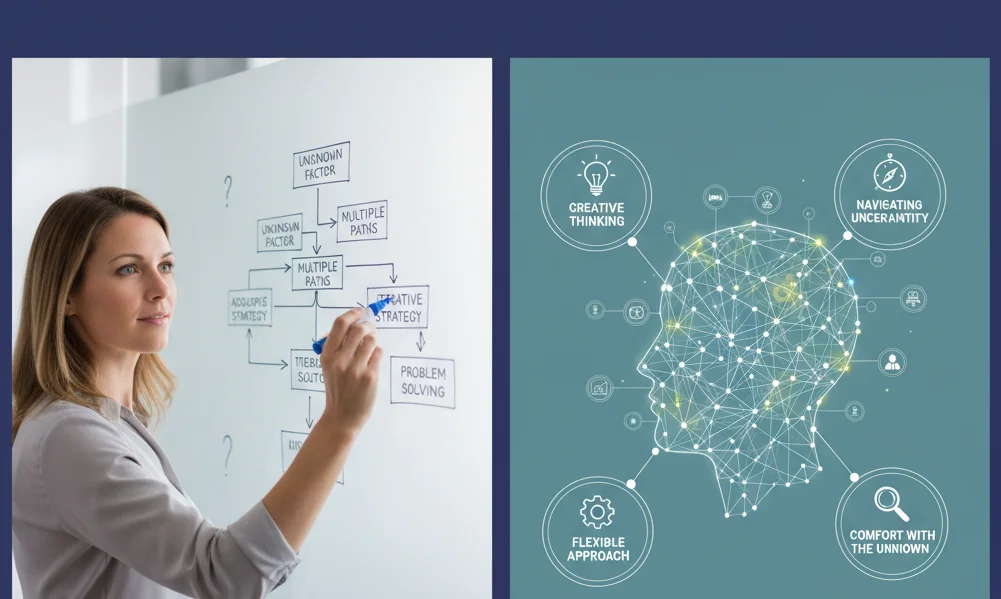
In a rapidly changing professional landscape, the ability to handle ambiguity has become a critical skill for success. Organizations often face uncertain situations where clear instructions, defined processes, or complete data are not available. Hiring managers actively seek candidates who can navigate such environments with confidence and effectiveness. While ambiguity handling is commonly assessed during interviews, it is also reflected in how candidates present their experiences on a resume. Subtle signals in wording, structure, and achievements can indicate whether a candidate thrives in uncertain situations.
What Handling Ambiguity Means in a Resume
Handling ambiguity refers to the ability to operate effectively in situations where information is incomplete, goals are evolving, or processes are not clearly defined. In a resume, this skill is reflected through experiences that show initiative, adaptability, and decision making in uncertain conditions.
Recruiters interpret this ability as a sign of maturity, strategic thinking, and resilience. Candidates who can manage ambiguity are often seen as valuable contributors in dynamic environments.
How Recruiters Identify Ambiguity Handling Skills
Working in Uncertain Contexts
Recruiters look for experiences where the candidate operated in environments with changing requirements or unclear expectations. This may include startup roles, new projects, or rapidly evolving industries.
Such contexts indicate exposure to ambiguity and the ability to navigate it.
Decision Making Without Complete Information
Making decisions without having all the data is a strong indicator of ambiguity handling. Recruiters assess whether candidates took action despite uncertainty and whether those decisions led to positive outcomes.
Outcome Based Evaluation
The results of actions taken in ambiguous situations are critical. Successful outcomes demonstrate effectiveness, while lessons learned from challenges show growth and resilience.
Key Resume Signals That Show Ability to Handle Ambiguity
Operating in Undefined Roles
Roles with unclear boundaries or evolving responsibilities highlight the ability to adapt and take initiative. Candidates who succeed in such roles demonstrate comfort with ambiguity.
Exploring Problems Without Clear Direction
Working on problems that lack predefined solutions indicates strong analytical and exploratory skills. Recruiters value candidates who can define and approach such challenges.
Taking Initiative in Unclear Situations
Initiative is a key signal of ambiguity handling. Candidates who step forward to address issues without waiting for instructions show confidence and proactiveness.
Content Strategies to Demonstrate Ambiguity Handling
Using Scenario Based Descriptions
Describing specific scenarios where ambiguity was present helps recruiters understand the context. Explain the situation, your approach, and the outcome.
Highlighting Structured Thinking
Even in uncertain situations, structured thinking is essential. Showing how you organized information and approached problems strengthens your profile.
Connecting Actions to Results
Linking your actions to measurable results demonstrates effectiveness. It shows that you can deliver outcomes despite uncertainty.
Behavioral Indicators Recruiters Look For
Adaptability and Flexibility
Adaptability is closely linked to handling ambiguity. Candidates who adjust to changing conditions are seen as capable of managing uncertainty.
Resilience Under Uncertainty
Resilience reflects the ability to stay focused and productive despite challenges. Recruiters value candidates who remain effective in uncertain environments.
Curiosity and Exploration
Curiosity drives exploration and understanding. Candidates who seek information and explore possibilities are better equipped to handle ambiguity.
How Ambiguity Handling is Evaluated Alongside Other Skills
Connection with Leadership
Leaders often operate in ambiguous situations. Strong ambiguity handling skills indicate leadership potential and the ability to guide others.
Link with Problem Solving
Handling ambiguity is closely related to problem solving. Candidates who can define and address unclear problems are highly valued.
Role in Innovation
Innovation requires navigating uncertainty and exploring new ideas. Candidates who handle ambiguity well are more likely to contribute to innovation.
Common Mistakes That Hide Ambiguity Handling Skills
Overly Structured Narratives
Presenting experiences as overly structured can hide the presence of ambiguity. It may appear as though the environment was predictable and controlled.
Lack of Context
Without explaining the uncertain nature of a situation, recruiters cannot assess your ability to handle ambiguity. Context is essential.
Missing Impact Statements
Failing to highlight results reduces the effectiveness of your resume. Outcomes demonstrate your ability to succeed in ambiguous situations.
Future Trends in Evaluating Ambiguity Handling
As organizations continue to face rapid change, the ability to handle ambiguity is becoming increasingly important. Employers are prioritizing candidates who can navigate uncertainty and drive results.
Future hiring practices may include real world simulations and scenario based assessments to evaluate this skill more effectively.
Conclusion
The ability to handle ambiguity is a powerful indicator of professional capability. Recruiters identify this skill through context, actions, and outcomes presented in a resume.
By highlighting experiences in uncertain environments, demonstrating initiative, and linking actions to results, candidates can effectively communicate their ability to thrive in ambiguity. In a competitive and evolving job market, this skill can significantly enhance career prospects.