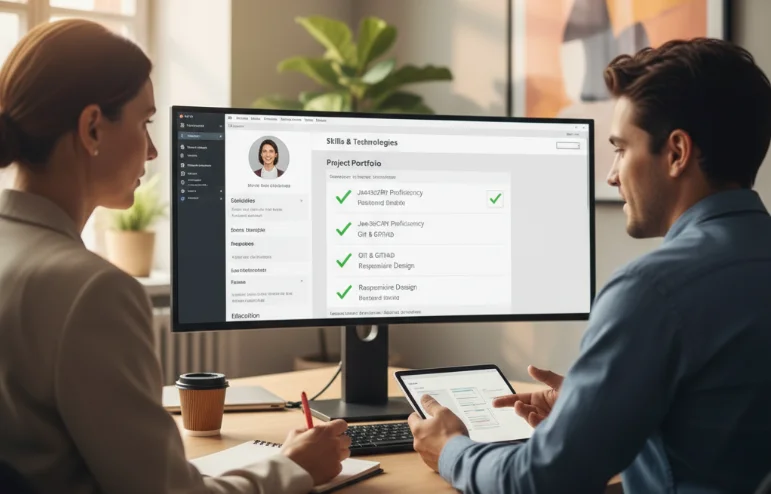
Hiring junior developers is less about expecting mastery and more about identifying potential. Recruiters and hiring managers are not looking for perfect expertise; they are looking for signals that someone can learn, adapt, and contribute meaningfully with guidance.
A strong junior candidate is evaluated on fundamentals, problem-solving ability, project thinking, and communication clarity rather than years of experience.
Why Junior Developer Hiring Is Different
Junior roles are designed for learning and growth. Because of this, recruiters adjust expectations compared to mid or senior-level hiring.
Instead of deep experience, they focus on:
- How well fundamentals are understood
- How candidates approach problems
- Evidence of practical learning through projects
- Ability to communicate technical thinking
The goal is to find someone trainable and consistent, not already fully experienced.
Core Technical Skills Recruiters Expect
Junior developers are expected to have a solid foundation in core technologies.
These include:
- HTML for structure and semantic understanding
- CSS for layout, responsiveness, and styling
- JavaScript for logic and interactivity
- Basic understanding of APIs and data handling
Framework knowledge is helpful but not always mandatory at entry level.
Problem-Solving and Thinking Ability
One of the most important traits recruiters look for is how a candidate thinks through problems.
They assess:
- Ability to break problems into smaller parts
- Logical thinking approach
- Willingness to debug and iterate
- Understanding of why something works, not just how
Even simple coding problems can reveal a lot about thinking style.
Project Quality Over Quantity
Projects are one of the strongest signals for junior developers, but quality matters more than volume.
Recruiters look for:
- Clear purpose behind each project
- Functional and complete applications
- Real-world usability or simulation of real problems
- Clean and understandable UI
A few well-built projects are more impactful than many incomplete ones.
GitHub and Code Visibility Signals
GitHub profiles help recruiters understand how candidates write and organize code.
Strong signals include:
- Consistent commits showing progress
- Readable project structure
- Meaningful repository names and descriptions
- Evidence of continuous learning
Even junior-level code is acceptable if it is clean and well-organized.
Communication and Clarity Signals
Recruiters also evaluate how well candidates explain their work.
They look for:
- Ability to describe projects clearly
- Simple explanations of technical decisions
- Confidence without overclaiming
- Clarity in resume and portfolio presentation
Good communication often compensates for limited experience.
Learning Ability and Growth Mindset
Since junior developers are expected to grow, learning ability is a major evaluation factor.
Recruiters look for:
- Evidence of self-learning through projects or courses
- Curiosity about tools and technologies
- Consistency in improving skills over time
- Ability to take feedback and improve
A strong learning mindset often outweighs current skill gaps.
Common Mistakes That Reduce Hiring Chances
Many junior candidates miss opportunities due to avoidable mistakes.
Common issues include:
- Over-reliance on tutorial clones without understanding
- Poorly documented or incomplete projects
- Lack of clarity in resume or portfolio
- Ignoring fundamentals while chasing frameworks
These issues signal lack of readiness for real work environments.
What Makes a Junior Developer Stand Out
Certain traits make junior candidates more memorable and hireable.
Standout signals include:
- Strong, well-explained projects with real use cases
- Clean and organized GitHub activity
- Clear understanding of fundamentals
- Ability to explain decisions simply and confidently
Even small improvements in clarity and structure can significantly increase interview chances.
Final Thoughts
Recruiters evaluating junior developers are not searching for perfection. They are looking for potential, consistency, and clarity of thinking. Strong fundamentals, meaningful projects, and clear communication often matter more than advanced technical expertise.
A junior developer who shows structured learning, thoughtful problem-solving, and clean presentation of work stands out even in competitive job markets.