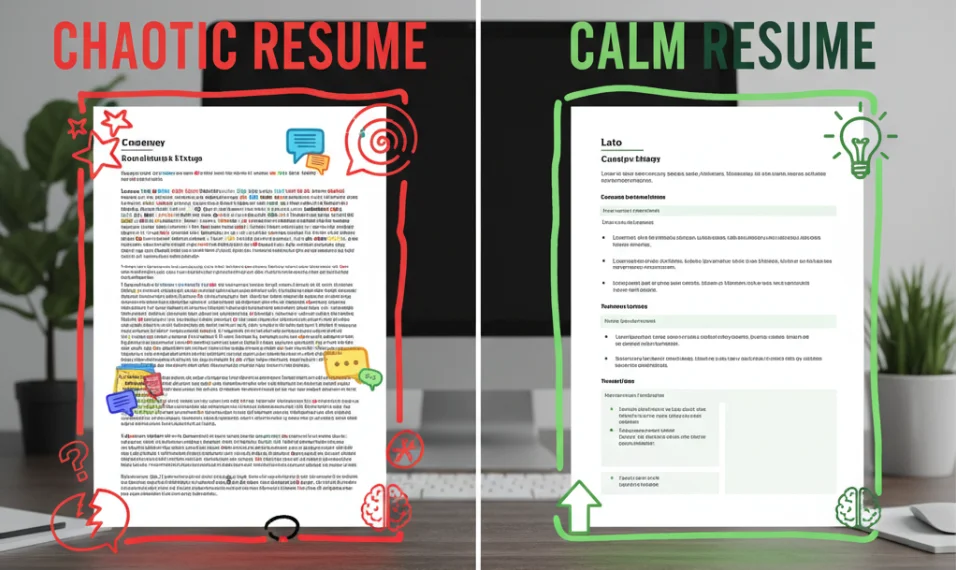
Recruiters often describe certain resumes as clean, clear, and easy to read, while others feel overwhelming or disorganized. This reaction is not accidental. The emotional tone of a resume is shaped by structure, formatting, language flow, and information hierarchy. A calm resume creates confidence and trust, while a chaotic resume increases cognitive strain and uncertainty. Understanding why some resumes feel calm and others feel chaotic allows job seekers to design documents that communicate professionalism, clarity, and strategic thinking from the very first glance.
Understanding Emotional Perception in Resume Design
Although resumes are professional documents, they trigger emotional responses. Human perception reacts instantly to visual structure and information density. A calm resume feels balanced and controlled, signaling organization and competence. A chaotic resume feels crowded, inconsistent, or confusing, which may unintentionally suggest lack of focus.
These impressions form within seconds and can influence whether a recruiter continues reading or moves to the next candidate.
The Psychology Behind Calm and Chaotic Layouts
Cognitive Load and Mental Processing
Cognitive load refers to the amount of mental effort required to process information. When a resume is cluttered with dense paragraphs, excessive formatting variations, or unclear sections, it increases cognitive load. Recruiters reviewing many applications prefer documents that require minimal interpretation.
A calm resume reduces mental strain by presenting information in digestible segments. This improves readability and enhances perceived professionalism.
Visual Hierarchy and Information Flow
Visual hierarchy guides the reader through the document in a logical sequence. Clear headings, consistent subheadings, and structured bullet points create predictable flow. When hierarchy is absent or inconsistent, the reader struggles to identify priorities, leading to a chaotic impression.
Strong hierarchy signals organization and intentional design.
Consistency and Predictability
Consistency builds trust. Uniform font styles, aligned dates, consistent spacing, and parallel sentence structure create a sense of order. In contrast, shifting formats, uneven margins, and irregular bullet styles disrupt visual harmony.
Predictability in layout allows recruiters to focus on content rather than structure.
Structural Elements That Create Calmness
White Space and Balanced Spacing
White space is not wasted space. It provides breathing room between sections and prevents overcrowding. Balanced spacing makes achievements stand out and improves overall clarity. Overfilled pages can feel rushed and visually overwhelming.
Alignment and Clean Formatting
Proper alignment of headings, dates, and bullet points creates visual symmetry. Clean formatting reflects attention to detail and organizational discipline. Even subtle misalignment can subconsciously reduce perceived precision.
Typography and Font Discipline
Limiting font choices to one or two professional styles maintains visual coherence. Excessive font changes create distraction. Consistent sizing and bolding establish hierarchy and guide attention effectively.
Common Factors That Make a Resume Feel Chaotic
Information Overload
Including every task, certification, or minor achievement can overwhelm the reader. Lack of prioritization suggests limited strategic thinking. A focused resume feels calm because it highlights what matters most.
Inconsistent Formatting
Irregular bullet lengths, mixed tense usage, and uneven section spacing create fragmentation. These inconsistencies distract from content and reduce readability.
Lack of Clear Positioning
When a resume attempts to target multiple roles simultaneously, it may feel scattered. Clear professional positioning creates coherence. A defined direction simplifies interpretation and reduces decision fatigue.
How Resume Energy Influences Recruiter Decisions
A calm resume encourages confident evaluation. Recruiters are more likely to engage deeply with a document that feels structured and controlled. Conversely, a chaotic resume may prompt quicker rejection due to perceived disorganization.
Emotional perception influences rational judgment. When a resume feels calm, the candidate appears methodical and capable. This subtle impression can increase interview probability.
Practical Strategies to Create a Calm, Professional Resume
Begin by simplifying layout and removing unnecessary design elements. Use consistent margins and balanced section spacing. Structure content with concise bullet points rather than long paragraphs.
Prioritize achievements over task lists. Maintain consistent verb tense and parallel sentence construction. Edit carefully to eliminate formatting inconsistencies.
Finally, review the resume from a distance. If it appears dense or visually crowded, adjust spacing and content length. Calmness is achieved through intentional simplicity.
Conclusion
Some resumes feel calm while others feel chaotic because of differences in structure, clarity, and cognitive ease. Calm resumes reduce mental effort, present information logically, and maintain consistent formatting. Chaotic resumes increase cognitive load and disrupt visual flow. By understanding the psychology behind these reactions, job seekers can design documents that communicate professionalism, control, and strategic thinking. A calm resume does not just look better. It influences perception, builds trust, and improves the likelihood of advancing in competitive hiring processes.