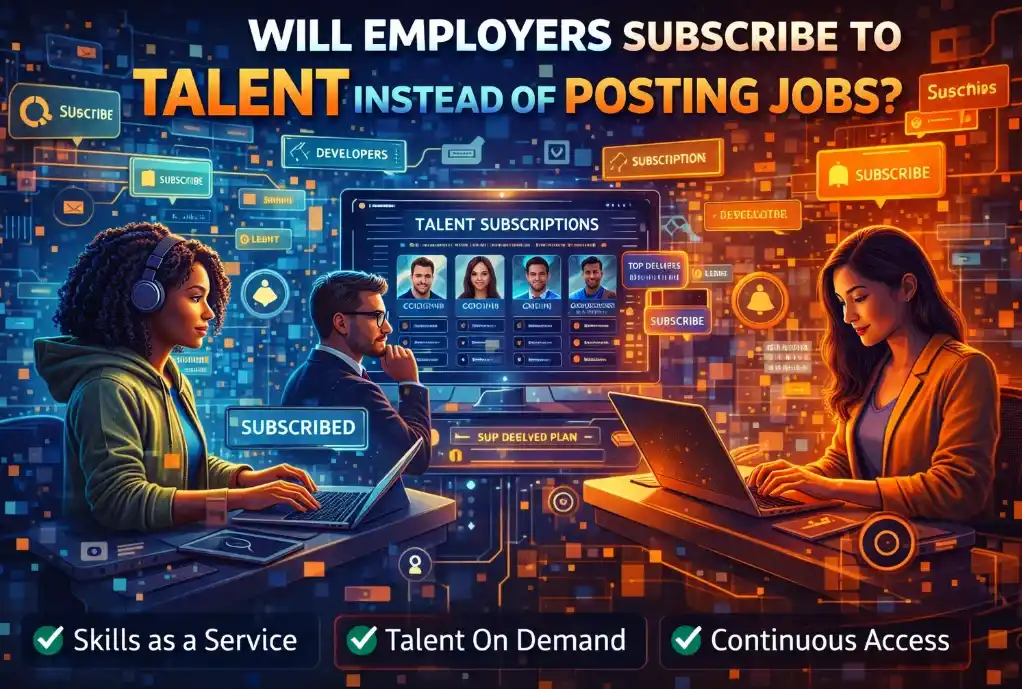
The hiring process is evolving beyond traditional job postings as organizations explore more efficient and proactive ways to access talent. Instead of waiting for candidates to apply, some companies are beginning to build ongoing relationships with professionals through talent platforms and curated talent pools. This emerging concept raises an important question about whether employers will eventually subscribe to talent in the same way they subscribe to services, shifting hiring from reactive to continuous engagement.
Understanding the Talent Subscription Model
What Is Talent Subscription
Talent subscription is a hiring model where employers gain access to a curated pool of candidates through a platform or service. Instead of posting individual job openings, companies subscribe to access talent profiles that are continuously updated and pre evaluated.
How the Model Works
In this model, candidates maintain active profiles that showcase their skills, experience, and availability. Employers subscribe to platforms that provide access to these profiles and can directly reach out to candidates who match their requirements.
Limitations of Traditional Job Posting
Delays in Hiring
Job postings often involve a lengthy process of publishing roles, collecting applications, and screening candidates. This can delay hiring decisions and slow down business operations.
Managing High Application Volume
Employers frequently receive a large number of applications, many of which may not be relevant. Sorting through these applications requires significant time and resources.
Why Employers Might Shift to Talent Subscriptions
Proactive Hiring Approach
Talent subscriptions allow employers to identify and engage with candidates before a position becomes urgent. This proactive approach can reduce time to hire and improve workforce planning.
Access to Pre Evaluated Talent
Many talent platforms offer pre screened or assessed candidates, which helps employers focus on quality rather than quantity. This can improve the efficiency of the hiring process.
Impact on Candidates
Continuous Visibility
Candidates benefit from ongoing visibility to potential employers. Instead of applying repeatedly, they can maintain a strong profile that attracts opportunities over time.
Shift in Competition Dynamics
Competition may shift from applying to jobs to maintaining a competitive profile. Candidates will need to focus on skills, achievements, and continuous improvement to stand out.
Benefits of Talent Subscription Hiring
This model offers several advantages, including faster hiring, improved candidate matching, and reduced administrative workload. Employers can build long term relationships with talent, while candidates gain access to opportunities without constant applications. The system encourages efficiency and better alignment between skills and job requirements.
Challenges and Concerns
Despite its potential, talent subscription hiring faces challenges such as platform dependency, data privacy concerns, and the need for standardization. Not all industries may adopt this model equally, and smaller organizations may face barriers to entry. Additionally, candidates may need to invest time in maintaining their profiles and staying visible.
Future of Recruitment Models
The future of recruitment is likely to combine traditional job postings with subscription based talent access. While job postings will remain relevant for certain roles, subscription models may become more common in industries that require specialized skills and rapid hiring. This hybrid approach can provide flexibility and efficiency.
How Professionals Should Prepare
Professionals should focus on building strong and updated profiles that highlight skills and achievements. Engaging with professional platforms, continuously learning, and maintaining visibility can increase chances of being discovered. Adapting to new hiring models requires a proactive approach to career management.
Conclusion
The concept of employers subscribing to talent represents a shift toward more proactive and efficient hiring. While it may not completely replace traditional job postings, it is likely to play a significant role in the future of recruitment. By understanding and adapting to this trend, both employers and candidates can benefit from a more dynamic and opportunity driven hiring ecosystem.