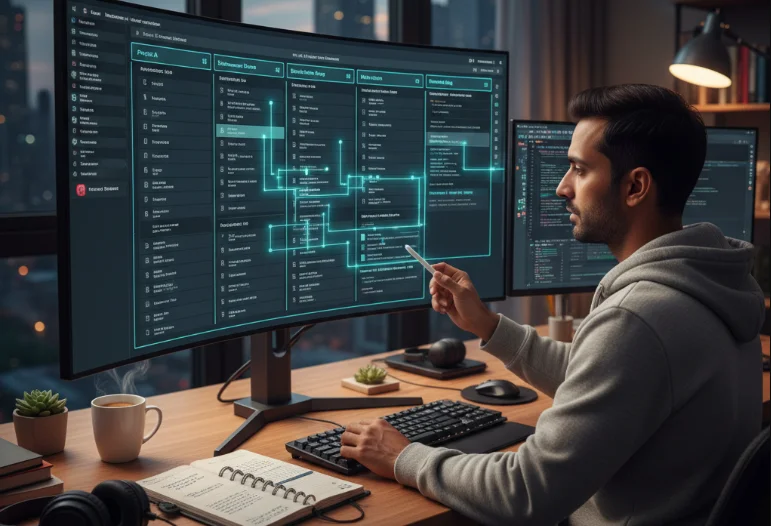
Managing multiple coding projects at the same time can feel overwhelming, especially when each project has different requirements, deadlines, and complexity levels. Without a clear system, it becomes easy to lose track, lose motivation, or switch between tasks without making real progress.
In this guide, I’ll explain how I manage multiple coding projects in a structured and realistic way that helps maintain productivity and focus.
Why Project Management Matters
Good project management is what separates consistent developers from overwhelmed ones.
- It helps you stay organized and focused.
- It reduces confusion when working on multiple tasks.
- It improves productivity and output quality.
Without structure, even simple projects can become chaotic.
Organizing My Workflow
I start by creating a clear structure for all my active projects.
- Each project has its own dedicated folder and repository.
- I separate active, paused, and completed projects.
- I keep notes for each project to track ideas and progress.
This helps me avoid mixing up tasks across different projects.
Prioritization Strategy
Not all projects have the same level of importance.
- I prioritize based on deadlines and complexity.
- I focus on high-impact tasks first.
- I avoid starting too many new projects at once.
Clear priorities prevent wasted effort and unfinished work.
Tools I Use to Stay Organized
I rely on simple tools to manage my workflow effectively.
- :contentReference[oaicite:0]{index=0} for version tracking and project repositories.
- :contentReference[oaicite:1]{index=1} for planning and documentation.
- :contentReference[oaicite:2]{index=2} for visual task tracking.
These tools help me maintain clarity across all projects.
Avoiding Context Switching Overload
Switching between too many tasks reduces productivity.
- I dedicate focused time blocks to each project.
- I avoid jumping between unrelated tasks frequently.
- I finish one meaningful task before moving to another.
Deep focus leads to better and faster results.
Breaking Down Tasks Effectively
Large tasks are broken into smaller, manageable steps.
- I divide features into small development chunks.
- I set clear mini-goals for each session.
- I track completion step by step.
Smaller tasks make progress easier to maintain.
Tracking Progress Across Projects
Keeping track of progress is essential when managing multiple projects.
- I update task status regularly.
- I review what was completed at the end of each day or week.
- I identify blockers early before they slow me down.
Progress tracking ensures nothing gets forgotten or delayed.
Staying Consistent Without Burnout
Consistency is more important than intensity.
- I avoid overloading my schedule with too many tasks.
- I take breaks to avoid mental fatigue.
- I balance learning, building, and reviewing work.
Sustainable effort leads to long-term success.
Common Mistakes to Avoid
Many developers struggle with multiple projects due to avoidable mistakes.
- Starting too many projects at once without finishing any.
- Lack of clear priorities or deadlines.
- Ignoring progress tracking.
- Constantly switching focus between tasks.
Avoiding these mistakes greatly improves productivity.
Final Thoughts
Managing multiple coding projects is not about doing everything at once—it is about creating structure, prioritizing wisely, and staying consistent. With the right workflow and mindset, you can handle multiple projects effectively without losing focus or motivation.