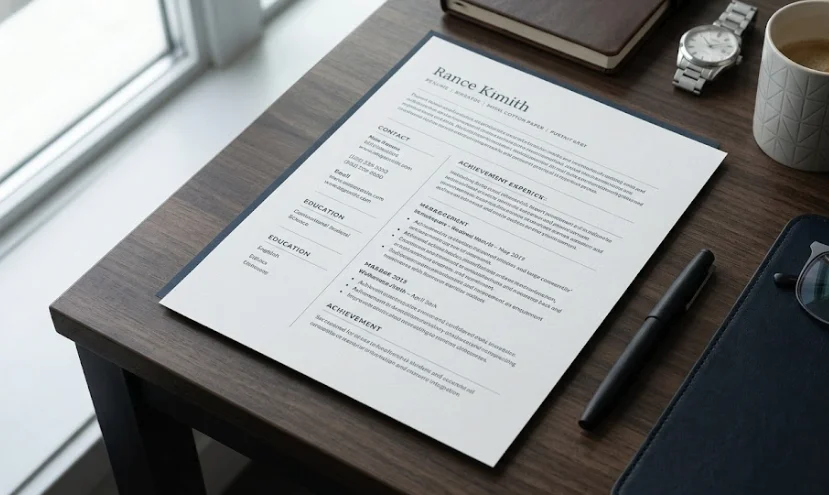
A premium and professional resume is not defined by fancy design or complex formatting. It is defined by how quickly and clearly it communicates competence, credibility, and relevance. In modern hiring, recruiters often decide within seconds whether a resume feels polished or average, and that perception strongly influences whether it gets deeper attention. A premium resume feels intentional. Every section has a purpose, every line adds value, and nothing feels random or inflated. It creates a sense of trust before the reader even finishes the first page.
What Premium Resume Quality Actually Means
A premium resume is one that feels refined, structured, and high-confidence without being exaggerated.
It communicates:
- Clarity of career direction
- Strong evidence of impact
- Professional maturity in presentation
It is not about decoration. It is about precision and signal quality.
The First Impression Effect
Recruiters form an impression of a resume in seconds, not minutes. This means the top section must immediately communicate value.
A strong first impression comes from:
- A clear professional headline
- A focused summary aligned with the role
- Immediate visibility of achievements or impact
If the top of the resume is unclear, the entire document feels less professional.
Clarity Over Complexity
One of the strongest signals of a premium resume is simplicity in communication.
Clarity means:
- No unnecessary jargon
- No overloaded sentences
- No cluttered formatting
A professional resume makes information easy to absorb, not difficult to decode.
High-End Resume Structure Principles
Structure plays a major role in perceived quality. A premium resume follows a logical and predictable flow.
A strong structure includes:
- Professional summary at the top
- Skills grouped by relevance
- Experience focused on achievements
- Projects or proof of work where relevant
This structure helps recruiters quickly evaluate fit without confusion.
Content Quality That Signals Professionalism
Premium resumes are defined more by content quality than visual design.
Strong content includes:
- Specific achievements instead of vague responsibilities
- Clear outcomes supported by numbers or impact
- Relevant experience tailored to the target role
High-quality content reduces doubt and increases perceived competence.
Visual Design Without Over-Designing
A premium resume has clean visual structure but avoids excessive design elements.
Effective design principles include:
- Consistent spacing and alignment
- Simple, readable fonts
- Balanced use of white space
- Clear section separation
Over-designed resumes often feel less professional, even if they look visually appealing.
The Role of Metrics and Evidence
One of the strongest indicators of a premium resume is the presence of measurable impact.
Metrics help answer:
- What changed because of your work
- How much improvement was achieved
- What scale of responsibility was handled
Examples include percentage improvements, cost reductions, efficiency gains, or growth figures.
Language That Feels Confident and Mature
Premium resumes use calm, precise language rather than exaggerated or emotional wording.
Effective language is:
- Direct and factual
- Action-oriented without hype
- Focused on outcomes instead of opinions
For example, saying improved system efficiency is stronger than saying highly innovative work.
Consistency as a Premium Signal
Consistency across formatting, tone, and structure is a subtle but powerful indicator of professionalism.
This includes:
- Uniform job description format
- Consistent tense usage
- Aligned bullet point structure
- Coherent career progression narrative
Inconsistency often makes resumes feel rushed or incomplete.
What Makes a Resume Feel Unprofessional
Several common mistakes can reduce perceived quality even when experience is strong.
These include:
- Generic buzzwords without evidence
- Overly long or dense paragraphs
- Cluttered formatting or inconsistent spacing
- Listing duties instead of achievements
These issues reduce clarity and weaken trust.
Before and After Comparison Examples
Before:
- Responsible for managing projects and working with teams
After:
- Led cross-functional projects that improved delivery timelines by 20 percent and enhanced team coordination efficiency
Before:
- Worked on improving system performance
After:
- Optimized system performance, reducing processing time by 35 percent through workflow restructuring
Before:
- Handled marketing activities for company campaigns
After:
- Executed marketing campaigns that increased customer acquisition by 28 percent through targeted strategy optimization
Conclusion
A resume feels premium and professional when it communicates clarity, confidence, and measurable value without unnecessary complexity. It is not about decoration or length but about precision in how experience is presented.
When structure is clean, language is purposeful, and achievements are supported by evidence, the resume naturally creates a high-quality impression that builds trust quickly with recruiters.
Ultimately, a premium resume does one thing exceptionally well: it makes competence easy to recognize.