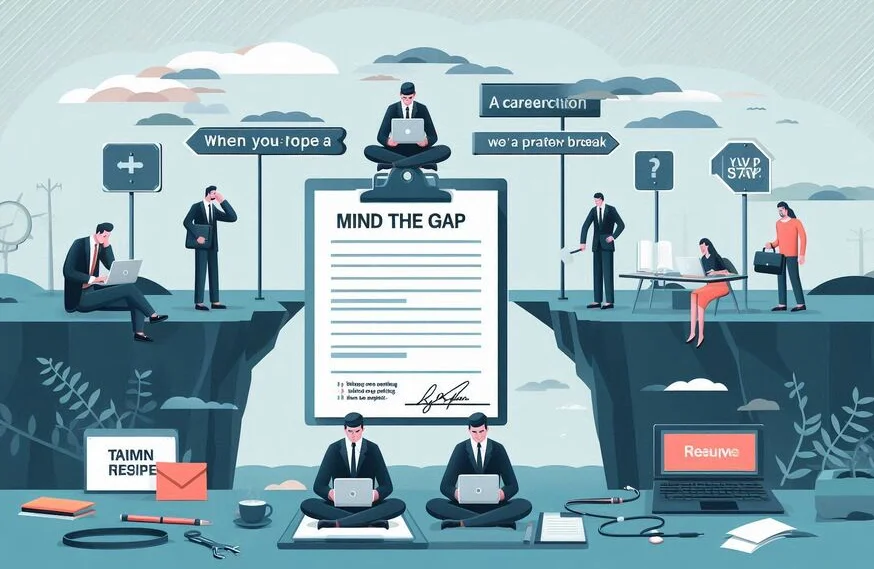
A career break can be a significant chapter in anyone's professional journey. Whether you took time off for personal reasons, family obligations, travel, or health recovery, there’s no denying that such a break can be seen as a gap in your resume. However, just because you stepped away from the workforce doesn’t mean you should hide it or be ashamed of it. In fact, a career break can actually be a unique asset in your job search if you know how to present it effectively. This post will help you navigate how to write a resume that turns a career gap into an opportunity, demonstrating that you are more than capable of reentering the workforce and making an impact.
Understanding the Career Break
A career break is any period of time when an individual is not employed in a traditional, full-time job. While career breaks can vary in length, they typically last anywhere from a few months to several years. Career breaks are often taken for personal reasons—whether to care for a loved one, raise children, pursue education, travel, or recover from illness or burnout. Despite the reasons, taking a career break can be viewed differently by different employers. Some may see it as a red flag, while others may appreciate the personal growth or skills you gained during that time.
The important thing is not to view your career break as a setback, but rather as an opportunity for reflection, growth, and development. Many candidates experience fear when they see a gap in their resume, but it’s important to remember that with the right approach, your break can be reframed as an asset that sets you apart from other applicants.
Why a Career Break Should Not Be a Drawback
Despite popular belief, taking a career break doesn’t automatically make you less qualified or less desirable to an employer. On the contrary, employers are increasingly recognizing the value of career breaks. They often show that a candidate has the ability to take a step back, reflect on their goals, and come back refreshed, focused, and ready to take on new challenges.
Moreover, career breaks can also help you develop a broader set of skills. Whether you were volunteering, freelancing, traveling, or taking care of family, these experiences likely helped you develop soft skills such as leadership, time management, problem-solving, and communication—skills that are essential in any professional environment.
In today’s increasingly flexible work culture, employers understand that not all career paths are linear. The rise of remote work, freelancing, and contract roles has opened up more opportunities for individuals to take career breaks without sacrificing their professional trajectory. More importantly, many employers are recognizing that time spent away from the office can contribute to personal growth, and that this growth can translate to valuable workplace contributions.
How to Effectively Address a Career Break on Your Resume
Now that you understand why a career break doesn’t have to be a liability, let’s dive into how you can address it on your resume. Here’s how you can turn your career break into a powerful selling point for your next job:
Be Honest but Positive
It’s essential to be transparent about your career break without oversharing or focusing too much on the negative aspects of your time off. Briefly explain the reason for the break in a concise, professional manner. Whether you were focusing on family, education, travel, or health, honesty is key, but be sure to focus on the positive outcomes of your time away from work.
- Example: "Took a career break from January 2020 to December 2021 to care for a family member. During this time, I developed strong organizational and multitasking skills, which I am now eager to apply in a full-time professional setting."
Focus on Transferable Skills and Volunteer Work
Even if you weren’t employed during your career break, you likely developed a wide range of transferable skills. Think about how your time away allowed you to gain skills that are relevant to the job you're applying for. Whether you managed household projects, worked on freelance assignments, or volunteered, these experiences can contribute to your professional growth.
- Example: "During my career break, I volunteered as a project coordinator for a local non-profit, where I led a team of volunteers to organize fundraising events and digital marketing campaigns."
Leverage Education and Courses During Your Break
Many individuals use their career breaks to upskill or learn something new. Whether you completed an online course, attended workshops, or earned a certification during your break, be sure to highlight these educational achievements. It shows potential employers that you were proactive and committed to continuing your professional development during your time off.
- Example: "Completed a certification in digital marketing through HubSpot Academy while on my career break, enhancing my skills in SEO, content creation, and social media management."
Reframe the Narrative and Position Yourself for Success
Instead of focusing on the gap itself, use your career break to create a compelling narrative about your journey. Position yourself as someone who used their break to gain fresh perspectives, develop new skills, and return to the workforce with a new sense of purpose. Employers value resilience, self-motivation, and the ability to adapt—qualities that many candidates gain during career breaks.
- Example: "After a year-long career break, I am excited to apply my enhanced project management and leadership skills to help drive successful initiatives within your company."
How to Show Readiness for Returning to the Workforce
It’s essential to demonstrate to employers that you are ready and eager to return to the workforce. Highlight any steps you’ve taken to ensure a smooth reentry, such as attending networking events, staying updated with industry trends, or participating in online communities related to your field.
- Example: "During my career break, I kept up-to-date with industry trends by attending webinars and completing online courses in my field to ensure I was prepared for reentry into the workforce."
The Importance of Tailoring Your Resume
As with any resume, it’s important to tailor your document to each specific job application. This means customizing your resume to align your experience—whether from your career break or prior professional roles—with the skills and qualifications outlined in the job description. Show the employer that you are not just a good candidate but the right candidate for the position.
Use specific keywords from the job listing, and highlight the skills and experiences that make you a standout applicant. Tailoring your resume also allows you to position your career break as a relevant and valuable part of your professional journey.
Final Thoughts
A career break doesn’t need to be a hindrance in your job search. When approached with the right mindset and strategy, it can become an asset that shows your ability to grow, adapt, and contribute in new ways. By addressing the gap in a positive light, highlighting transferable skills, and demonstrating your readiness for reentry, you can present yourself as a valuable candidate eager to make a meaningful contribution to your future employer.