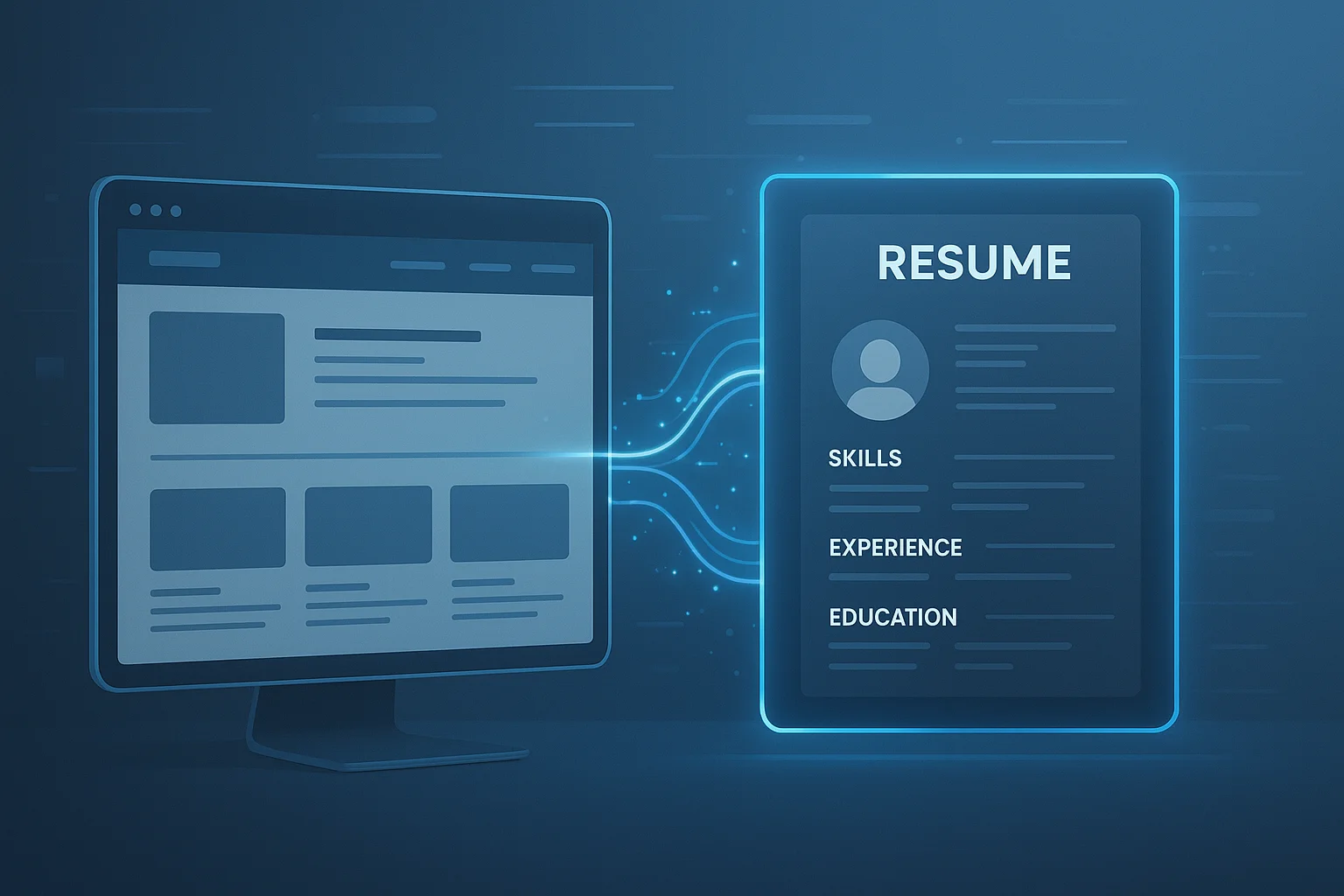
In today's digital world, having an online presence is more important than ever. Whether you're a job seeker, freelancer, or entrepreneur, your resume serves as a key representation of your professional identity. But rather than limiting yourself to a traditional paper or PDF resume, syncing your resume with your personal website or online portfolio can create a more dynamic, accessible, and engaging presentation of your qualifications. In this post, we'll explore how to sync your resume with your personal website and why it's an essential move for boosting your career and professional image.
Introduction
Your personal website or online portfolio serves as a hub for your personal brand, showcasing your skills, accomplishments, and expertise. By syncing your resume with your site, you make it easier for potential employers or clients to find and review your qualifications. A well-integrated resume can also enhance your site's SEO, helping you rank higher in search results and gain more visibility. This post will guide you through the process of syncing your resume with your personal website in a way that is both professional and effective. Whether you are using a pre-designed platform or a custom-built website, the goal is to create a streamlined, professional, and easily accessible representation of your professional journey.
Why Syncing Your Resume Matters
Syncing your resume with your personal website offers several benefits that can increase your professional visibility. Below are some key reasons why this integration is a smart move:
Showcase a Holistic View of Your Skills
By linking your resume to your portfolio, you provide a comprehensive view of your skills and experiences. A resume on its own may list job titles, education, and dates, but your website allows you to expand on each section with examples of your work, client testimonials, and detailed descriptions of projects you've completed. This dynamic format helps employers or clients see not just what you've done, but how well you've done it. Instead of just listing your responsibilities in a job, you can show real-world results with images, case studies, or even interactive elements such as videos or downloadable presentations.
Easy Accessibility for Employers
Making your resume available on your website offers easy access for potential employers or collaborators. They can view it anytime without needing to download or email a file. You can also offer a downloadable version for those who prefer to save a copy. This flexibility ensures that your resume is always accessible to your audience. When integrated into your website, your resume becomes part of a living, evolving document, and it can be updated in real-time without requiring you to manually distribute new versions or worry about version control.
Enhance Your Professional Appearance
Having a digital resume integrated with your website demonstrates tech-savviness and modern professionalism. It signals to potential employers that you are proactive and comfortable with digital tools, which is especially important in today's job market where online applications and digital communication are the norm. Furthermore, the presentation of your resume within the context of your personal brand on your website shows your commitment to showcasing your skills and experience in the best possible light.
Strengthen Your Personal Branding
One of the most significant benefits of syncing your resume with your personal website is the opportunity to reinforce your personal brand. Your website gives you complete control over how your story is told. By integrating your resume into this space, you can craft a narrative that highlights not just your job history, but also your values, passions, and professional aspirations. It allows you to convey your uniqueness and differentiate yourself from others in your field.
Steps to Sync Your Resume with Your Website
Choosing the Right Platform
Before syncing your resume, you need to ensure that your website is on the right platform. Popular website builders like WordPress, Squarespace, Wix, or even custom-built sites allow you to integrate your resume seamlessly. Choose a platform that suits your needs, whether you prefer ease of use or a more customizable experience. The platform should allow you to add pages, create downloadable content, and integrate multimedia such as images, videos, or presentations. If you already have a blog or portfolio, syncing your resume with your existing content management system (CMS) will ensure consistency across your professional online presence.
Integrating Your Resume into Your Website
Once you have your website set up, it's time to integrate your resume. Here are several ways you can do this:
- Embed the resume directly into a webpage: You can create a dedicated page that highlights your resume, including sections like your education, experience, skills, and achievements. Use a clean and professional design with sections that are easy to read and navigate. Consider using tools such as tables or collapsible sections for long-form content.
- Offer a downloadable version: Provide a button or link where visitors can download your resume as a PDF. Make sure the file is optimized for both readability and file size. Also, be sure to update the downloadable version regularly to reflect any changes in your career.
- Link to your LinkedIn profile: If your LinkedIn profile is up-to-date and reflects your professional journey, link directly to it from your website for easy access. LinkedIn often serves as a more interactive platform where potential employers can see recommendations, endorsements, and network connections.
- Showcase case studies or success stories: You can further enhance your resume by integrating specific projects or case studies alongside your work experience. These could include detailed breakdowns of specific tasks you led, the challenges you overcame, and measurable results you achieved.
Optimizing for SEO and Mobile
Once your resume is integrated, it's important to optimize it for search engines and mobile devices:
- Implementing SEO Strategies: To improve your site's SEO, ensure that your resume includes relevant keywords for your field. Use headings (H2, H3, etc.) that are descriptive and include terms that potential employers may search for. For example, if you're a software developer, include terms like “software development,” “coding,” “programming languages,” etc. Also, make sure to include metadata and image alt text to improve your page's searchability. This not only helps employers find you but also increases your site's visibility on Google.
- Making Your Resume Mobile-Friendly: Many users will view your website on their mobile devices. Ensure that your resume page is responsive, meaning it looks good and functions well on both desktop and mobile. This may involve simplifying your design or ensuring text is easily readable on smaller screens. You may also want to test navigation elements, making sure buttons and links are easy to tap.
Testing and Updating Your Resume
Once everything is live, test how your resume appears on different devices and browsers to ensure compatibility. Use tools like Google Analytics or browser developer tools to monitor how users interact with your resume page. It's also essential to regularly update your resume on your website. As you gain new skills or experience, make sure your online resume reflects those updates. Having an up-to-date resume on your website signals to employers that you're active and engaged in your career. Moreover, periodically revisiting your website’s design and content ensures that it aligns with your current professional goals and branding.
Conclusion
Syncing your resume with your personal website or online portfolio is a great way to stand out in today's digital-first job market. Not only does it give you a professional edge, but it also allows you to showcase your qualifications in a more engaging and interactive way. By following the steps outlined in this post, you can ensure that your resume is accessible, up-to-date, and optimized for maximum visibility. Whether you're just starting out or are an experienced professional, integrating your resume into your personal website will help you advance your career and build your professional brand.