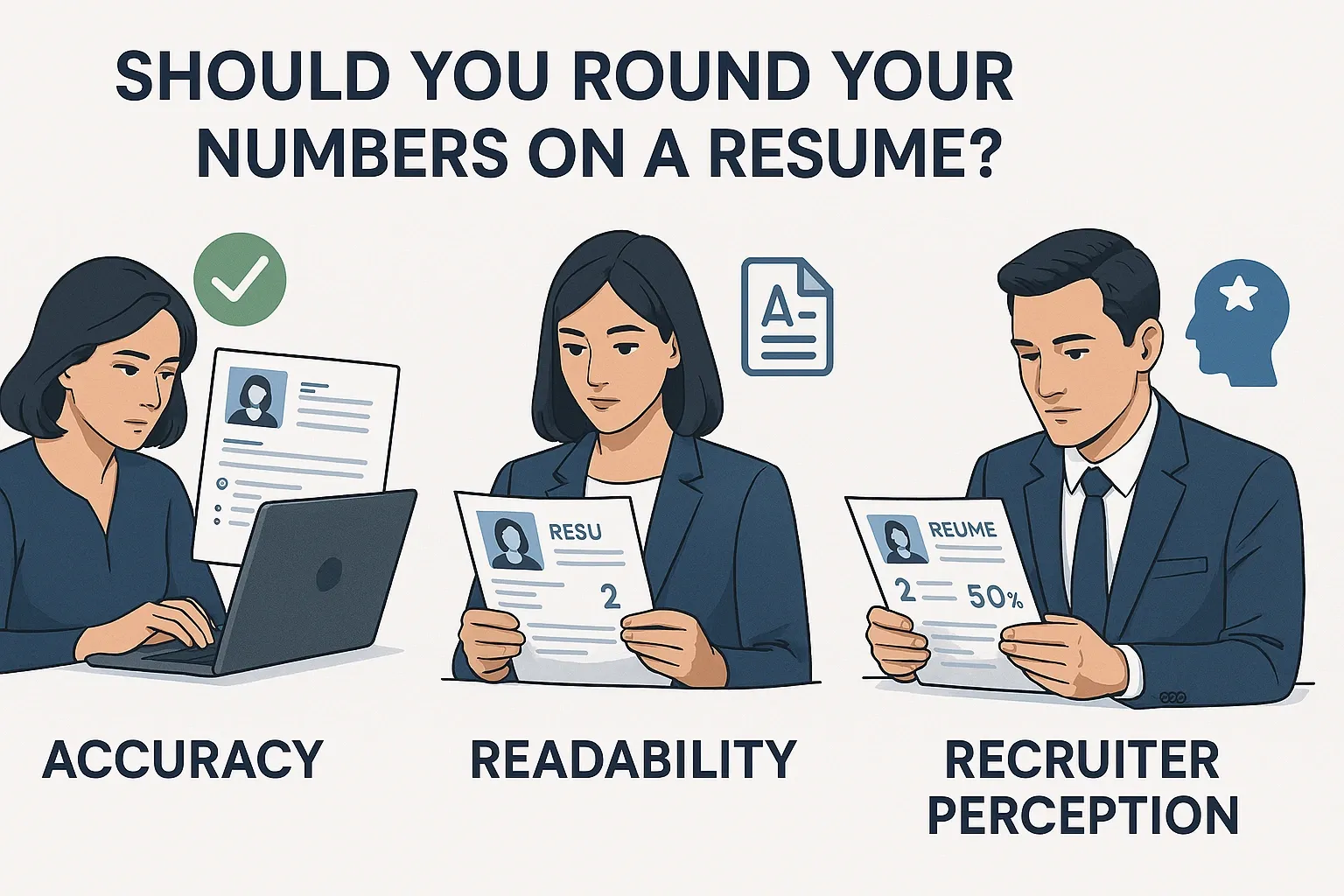
Numbers on a resume serve as a tangible representation of your achievements. They give recruiters a clear sense of scale, impact, and performance. However, candidates often wonder whether they should round figures or present them in precise detail. For example, is it better to write increased sales by 3,478 units or simply round it to 3,500 units? While rounding can improve readability, it also carries potential pitfalls if it compromises accuracy or credibility. This guide explores how to strategically round numbers on your resume without losing impact.
Why Numbers Matter on a Resume
Quantifiable Impact and Recruiter Attention
Recruiters process resumes quickly, often in less than 10 seconds. Numbers provide instant clarity about the scale of your accomplishments. A clear metric communicates results faster than descriptive text alone. For example:
Increased revenue by $124,375 in Q3
Managed a team of 18 employees
Such figures help hiring managers gauge the tangible results of your work and compare candidates objectively.
Clarity and Credibility in Numerical Data
Numbers also establish credibility. Precision indicates attention to detail and authenticity. However, overly detailed figures can overwhelm readers. Striking a balance between clarity and credibility is essential for resume effectiveness.
Pros of Rounding Numbers
Simplicity for Readers
Rounding simplifies complex numbers, making them easier to digest at a glance. For instance:
3,478 → 3,500
97.6% → 98%
Simplicity improves scanning efficiency, allowing recruiters to quickly grasp your accomplishments without being distracted by minor details.
Improved Visual Impact
Rounded numbers can enhance visual appeal and readability. They prevent clutter, especially when multiple metrics are presented. A resume that is easy on the eyes keeps recruiters engaged and highlights key achievements more effectively.
Cons of Rounding Numbers
Loss of Accuracy and Specificity
Rounding may reduce accuracy, particularly for metrics where small differences matter. In financial, technical, or scientific roles, exact figures demonstrate precision and expertise. For example, reporting $3,478 as $3,500 might seem negligible in everyday scenarios, but in a high-stakes budget context, it could matter.
Risk of Perceived Exaggeration
Over-rounding can create the impression of exaggeration. Recruiters may doubt the authenticity of your achievements if numbers seem inflated. Maintaining trust is critical, especially for resumes that undergo verification processes during background checks.
Best Practices for Using Rounded Numbers
Contextual Appropriateness
Consider the audience and role before rounding. For example:
For operational or creative roles, rounded figures such as 3,500 units sold are acceptable.
For finance, engineering, or analytics roles, retain precision to demonstrate analytical rigor.
Rule of thumb: Round when clarity improves comprehension; retain precision when accuracy is essential.
Combining Precision and Readability
You can strike a balance by rounding large numbers but keeping smaller figures precise. For instance:
Revenue increased by $3.48 million instead of $3,478,234
Customer satisfaction improved by 97.6% → 98%
This approach communicates both scale and accuracy without overwhelming the reader.
Common Mistakes When Rounding Numbers
Rounding up too aggressively, making metrics appear inflated
Rounding all numbers indiscriminately, reducing detail for critical metrics
Failing to provide context, leaving recruiters unsure about impact
Using inconsistent rounding across different metrics
Avoid these errors to ensure your resume remains both credible and readable.
Conclusion
Rounding numbers on a resume is a strategic choice that balances clarity, readability, and credibility. Small adjustments can enhance visual appeal and comprehension, but accuracy should not be sacrificed, especially for critical metrics. The best approach is context-driven: round when it improves readability, retain precision when exact numbers reflect expertise, and always ensure that rounded figures truthfully represent your achievements. A thoughtfully rounded resume communicates impact effectively while maintaining professional integrity.