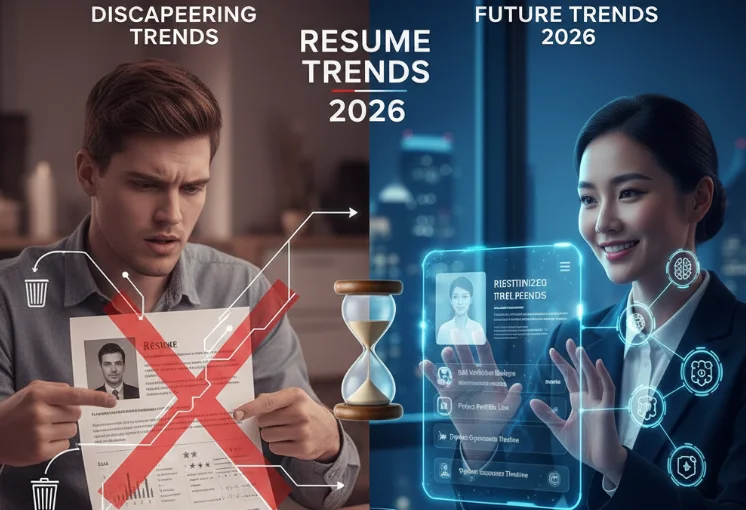
Resume writing is undergoing one of the biggest transformations in decades. By 2026, hiring systems are heavily influenced by artificial intelligence, automated screening tools, and skills based evaluation models. Because of this shift, many traditional resume practices that once helped candidates stand out are now becoming outdated or even harmful.
Recruiters are no longer relying on outdated formatting habits or generic content structures. Instead, they focus on measurable impact, real skills, and contextual evidence of capability. At the same time, AI based Applicant Tracking Systems are becoming more advanced, analyzing not just keywords but meaning, structure, and relevance.
This evolution is causing several long standing resume trends to disappear completely.
Why Resume Trends Are Changing
AI and Automated Hiring Systems
Modern hiring processes rely heavily on AI driven systems that evaluate resumes before they ever reach a human recruiter. These systems now analyze context, skills alignment, and structured evidence rather than simple keyword matching.
Recent hiring data shows that most large organizations already use automated screening tools, and many resumes are filtered out before human review even begins :contentReference[oaicite:0]{index=0}.
Because of this, older tricks like formatting hacks or keyword stuffing are becoming ineffective.
Shift Toward Skills Based Evaluation
Employers are increasingly prioritizing skills, outcomes, and real experience over traditional resume formatting rules. Many companies now use project based assessments and portfolio evaluations instead of relying solely on resumes :contentReference[oaicite:1]{index=1}.
This shift reduces the importance of rigid formatting traditions and increases demand for clear, evidence based storytelling.
Outdated Resume Trends Disappearing in 2026
Generic Objective Statements
The traditional resume objective is one of the fastest disappearing elements. Statements like seeking a challenging position add no value to recruiters.
Modern hiring prefers a professional summary that highlights:
- Key skills
- Measurable achievements
- Industry relevance
- Value proposition
Generic objectives are being replaced by results focused introductions that immediately show candidate impact.
Strict One Page Resume Rule
The idea that every resume must be exactly one page is no longer relevant. Recruiters now prioritize readability and relevance over strict length rules.
Many professionals with several years of experience now use two page resumes when necessary to properly present their achievements :contentReference[oaicite:2]{index=2}.
The focus has shifted from length constraints to clarity and content quality.
Keyword Stuffing for ATS
Earlier resume strategies focused heavily on repeating keywords to pass ATS filters. This approach is quickly disappearing as AI systems become more advanced.
Modern ATS tools now understand context and semantic meaning, not just exact keyword matches :contentReference[oaicite:3]{index=3}.
Instead of keyword stuffing, resumes now need:
- Natural language descriptions
- Context rich achievements
- Skill based storytelling
Overusing keywords can now reduce readability and harm performance.
Overly Designed Visual Resumes
Resumes with heavy graphics, icons, columns, and complex layouts are becoming less effective because they can confuse ATS systems.
Modern hiring systems prefer:
- Simple formatting
- Clean structure
- Standard headings
- Readable text based layout
A visually creative resume may look attractive but often performs poorly in automated screening.
Duty Based Job Descriptions
Listing job responsibilities is becoming outdated. Employers no longer want to know what you were supposed to do, but what you actually achieved.
Weak example:
Responsible for managing marketing campaigns
Strong example:
Increased customer engagement by 35 percent through targeted marketing campaigns and performance optimization
Achievement based descriptions now dominate modern resume expectations.
References Available Upon Request
This phrase is almost completely obsolete. Employers already assume references are available when needed, so including this line wastes valuable space.
Modern resumes instead focus on:
- Skills
- Experience
- Achievements
- Portfolio links when relevant
Full Street Address on Resume
Including a full street address is no longer necessary in most cases. With remote and hybrid work becoming common, location details are usually limited to city and country.
Removing full addresses improves privacy and keeps resumes cleaner and more modern.
What Is Replacing These Trends
As outdated resume practices disappear, new strategies are replacing them. Modern resumes now focus on:
- Skills based presentation instead of job titles alone
- Achievement driven bullet points
- AI friendly formatting
- Portfolio and proof based applications
- Clear professional branding
Hiring is increasingly moving toward evidence based evaluation rather than formatting traditions.
Common Mistakes Job Seekers Still Make
Even with evolving trends, many candidates still rely on outdated practices. Common mistakes include:
- Over designing resumes with complex visuals
- Using vague job descriptions without results
- Ignoring ATS friendly formatting rules
- Writing generic summaries without personalization
- Overloading resumes with unnecessary sections
These mistakes reduce the chances of passing both automated and human screening.
Future of Resume Building
The future of resumes is moving toward integrated career profiles that combine resumes, portfolios, and digital proof of work. AI driven hiring systems are also becoming more sophisticated in evaluating real capability rather than just text descriptions.
Future trends may include:
- AI analyzed skill verification
- Portfolio based hiring systems
- Interactive resume formats
- Real time skill assessments
This means resumes will become more dynamic, evidence based, and skill focused over time.
Conclusion
Many traditional resume practices are disappearing in 2026 as hiring systems become more advanced and skills focused. Generic objectives, keyword stuffing, strict one page rules, and overly designed formats are no longer effective in modern recruitment.
Instead, employers now value clarity, measurable achievements, structured storytelling, and real evidence of skills. Resumes that adapt to these changes will perform better in both automated systems and human evaluations.
Understanding which trends are fading helps job seekers avoid outdated strategies and focus on what truly matters in modern hiring environments: skills, impact, and professional clarity.