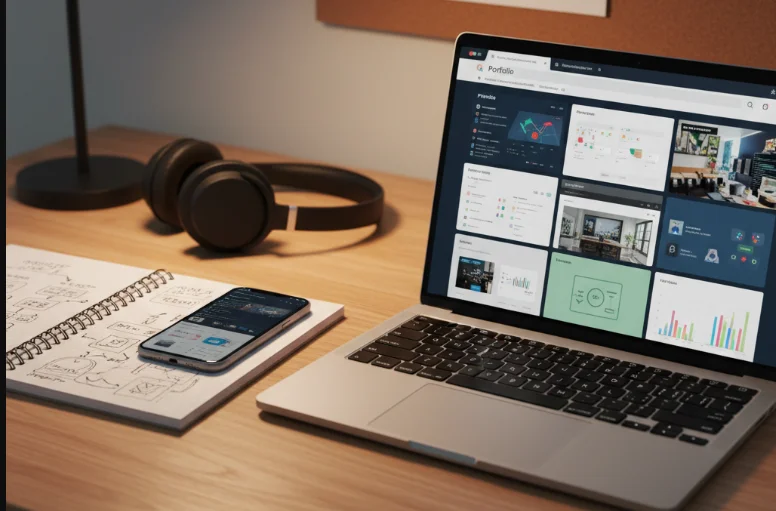
A strong developer portfolio is built on projects that demonstrate skill, problem-solving ability, and real-world thinking. Recruiters do not just look for what you built, but how you built it, why you built it, and how clearly you can explain it.
The best portfolio projects are not necessarily the most complex ones, but the ones that clearly show growth, technical understanding, and practical application.
Why Projects Matter in a Developer Portfolio
Projects are the most important part of a developer portfolio because they prove real ability beyond theory. While resumes list skills, projects demonstrate how those skills are used in practice.
Recruiters evaluate projects to understand:
- Your problem-solving approach
- Your understanding of tools and frameworks
- Your ability to build real applications
- Your attention to detail and UI/UX thinking
A strong project can often outweigh years of experience listed on a resume.
How to Choose Strong Portfolio Projects
Not all projects are equally valuable. The best portfolio projects follow certain principles.
Strong projects are:
- Solving a real or realistic problem
- Built with clean and maintainable code
- Deployed and accessible online
- Easy to explain in interviews
Avoid projects that are too basic or purely tutorial-based without personal improvement.
Beginner-Friendly Portfolio Projects
These projects help build foundational skills and confidence.
Examples include:
- To-Do List Application with task management
- Simple Calculator with basic operations
- Personal Portfolio Website
- Weather App using a public API
These projects focus on core HTML, CSS, and JavaScript concepts.
Intermediate Projects That Show Real Skill
Intermediate projects demonstrate your ability to handle structure, logic, and APIs.
Examples include:
- Expense Tracker with charts and data storage
- Movie Search App using external APIs
- Blog Platform UI with CRUD functionality
- Quiz Application with scoring system
These projects show understanding of state management and data handling.
Advanced Projects That Impress Recruiters
Advanced projects demonstrate real-world engineering thinking and scalability.
Examples include:
- E-commerce platform with cart and checkout flow
- Real-time chat application using WebSockets
- Task management system with user authentication
- Dashboard with analytics and data visualization
These projects show strong understanding of architecture and user experience.
Full-Stack Projects for Strong Impact
Full-stack projects demonstrate ability to work across frontend and backend systems.
Examples include:
- Job portal with user login and posting system
- Social media clone with posts and interactions
- Online learning platform with courses and progress tracking
- Inventory management system with admin dashboard
These projects show end-to-end system understanding.
UI-Focused Projects for Frontend Developers
For frontend developers, UI-focused projects are essential to show design skills.
Examples include:
- Landing page clones of popular websites
- Responsive dashboard UI
- Interactive form designs with validation
- Component library or design system
These highlight attention to design, spacing, and responsiveness.
Common Mistakes When Choosing Projects
Many developers weaken their portfolio by making avoidable mistakes.
Common mistakes include:
- Building too many tutorial-based clones without originality
- Not deploying projects online
- Ignoring responsiveness and mobile design
- Not explaining project purpose or features
A few strong, well-documented projects are better than many incomplete ones.
How to Present Projects in a Portfolio
Presentation is as important as the project itself. Recruiters should understand your work quickly.
Each project should include:
- Clear title and short description
- Technologies used
- Live demo link
- GitHub repository link
Good presentation makes your skills more visible and credible.
Final Thoughts
The best projects to include in a developer portfolio are those that demonstrate progression, problem-solving ability, and real-world thinking. From simple applications to full-stack systems, each project should show a clear step forward in skill and understanding.
A strong portfolio is not defined by quantity, but by clarity, depth, and how well each project communicates your abilities as a developer.